WORDS: Kara Chalmers
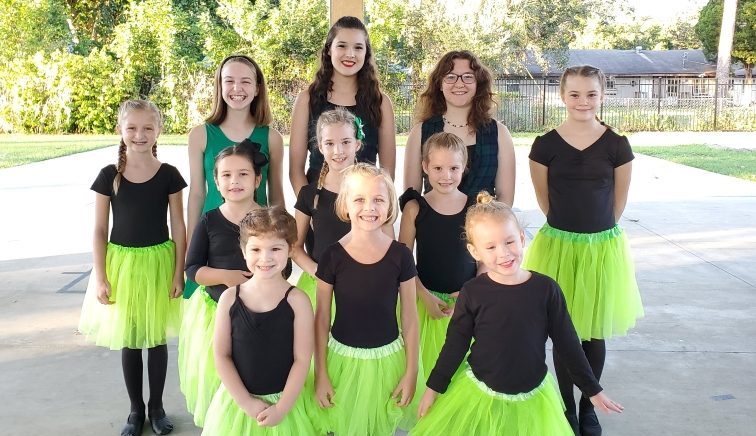
On a recent Wednesday evening, in the Sunday School room at Trinity United Methodist Church in Bradenton, eight little girls danced. Matched by height and ability in groups of two, the girls kicked, tapped, and spun, sometimes holding hands, always smiling.
This was a typical Irish dancing class at the O’Reilly School of Dance. These younger girls ages four to 10 practice from 4:30 to 5:30 p.m. Older girls – ages 11 and up – dance for an hour starting at 5:30 p.m.
All of the girls seemed to love the class. For reasons, they cited the fun atmosphere, the fast-paced music, the chance to spend time with friends, and a passion for dance. They also love their teacher, Fiona O’Reilly.
“I would do it for 1,000 years,” said six-year-old Maggie Gubernat, who’s been Irish dancing for two years.
“She’s super kind,” Maggie said about O’Reilly. “And fabulous!”
Maggie’s sister Mia, nine, said she had never heard of Irish dancing until her mother signed up her and her sister for class.
“I’m proud I’ve learned Irish dancing,” Mia said.
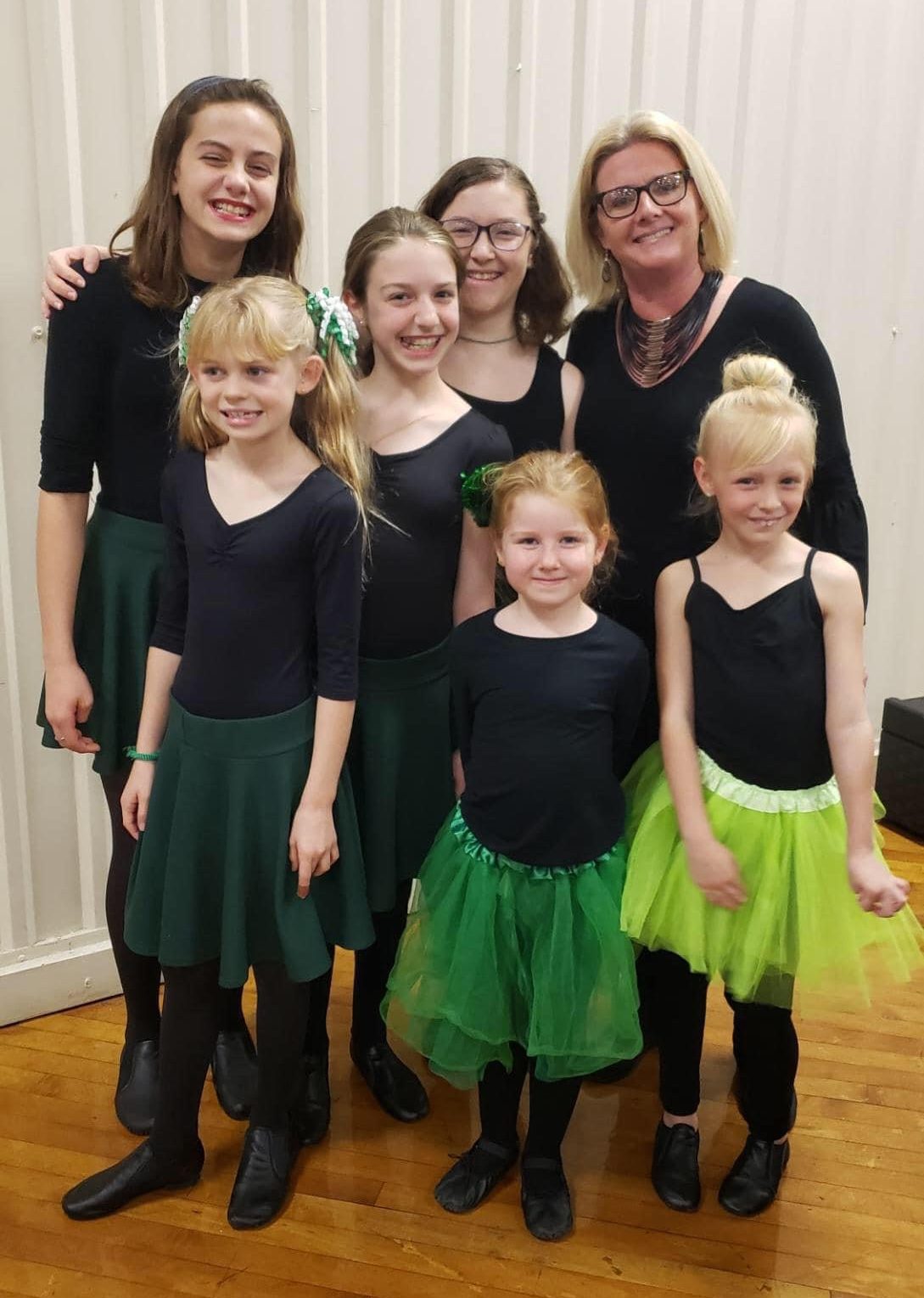
As mentioned above, this was just a class. The dancers have even more fun at the local performances they attend for the New World Celts, O’Reilly said, where they get to display their skills and dress up, usually in black shirts and tights, along with green skirts that O’Reilly provides.
“They really enjoy it; I try to make it fun,” said O’Reilly. “I love it. I love teaching these kids. They’re amazing.”
Unfortunately, the number and frequency of performances have plummeted since the onset of COVID-19 in the spring. The class size has dropped, too, O’Reilly said. In the past, she has had up to 30 dancers. Currently, she has 12.
Best Foot Forward
Irish dancing is a traditional Gaelic or Celtic style of dance, performed solo or in groups. It’s marked by precise, quick foot movements, kicking and swinging legs, and pointed feet and toes. Dancers often use the whole stage (or room) for their dances, which can include hops, skips, high kicks, toe-tapping, twirls, stamps, shuffles, and a bow at the end.
Some Irish dances resemble ballet, but at a much faster speed. Unlike ballerinas, Irish dancers keep their upper body stiff, with their arms still and straight at their sides, held close to the body. The reason, O’Reilly said, is so viewers can focus on the dancers’ intricate footwork. Irish dancers keep their shoulders back and their heads and eyes up. They try to stay as high on their toes as possible.
Irish dance is set to traditional Irish music, which is upbeat, with a fast tempo and instruments including the drum, fiddle, accordion, and harp.
 Irish dance forms can be categorized by rhythm and/or shoe. The dance forms “reel” and “jig” each have its own music, the reel with a faster tempo than a jig. A reel is the most common music played, the most common dance form, and usually, the first dance taught to students.
A jig is more elegant and graceful than a reel, and there are many types. For example, a light jig is the fastest type, and the slip jig is sometimes called the ballet of Irish dance.
As dancers become more adept, the speed or tempo of dances slows down so that they can perform quicker, more complicated steps to the slower tempos.
As for shoes, soft shoes, called poms, are used for dancing reels, slip jigs, and light jigs. They fit kind of like ballet slippers. They’re made of black leather, are flexible, and lace from toe to ankle.
Hard shoes, which are similar to tap shoes, are used to dance the hornpipe, treble (or double) jig, treble reel, and St. Patrick’s Day dance forms.
At the O’Reilly School, the dancers learn everything from a reel to a St. Patrick’s Day hard shoe dance.
“We do it all,” O’Reilly said.
While Irish dance competitions take place around the world, the O’Reilly School of Dance doesn’t compete.
Keeping Them on Their Toes
O’Reilly, the preschool director at Trinity church, has taught Irish dance for eight years.
As a child growing up in New Ross, in County Wexford, Ireland, O’Reilly started dancing at age three, at a school in walking distance from her home. Irish dancing schools are prevalent in Ireland, she said.
O’Reilly typically practiced four days a week. Around age eight, she started traveling around the country at least once a month for competitions. While she also did gymnastics and played tennis, dancing was her passion. She even tried out for Riverdance, the theatrical show that debuted in 1994 and popularized Irish dance and music worldwide.
“It kind of comes naturally when you’re Irish,” she said. “It’s in your blood.
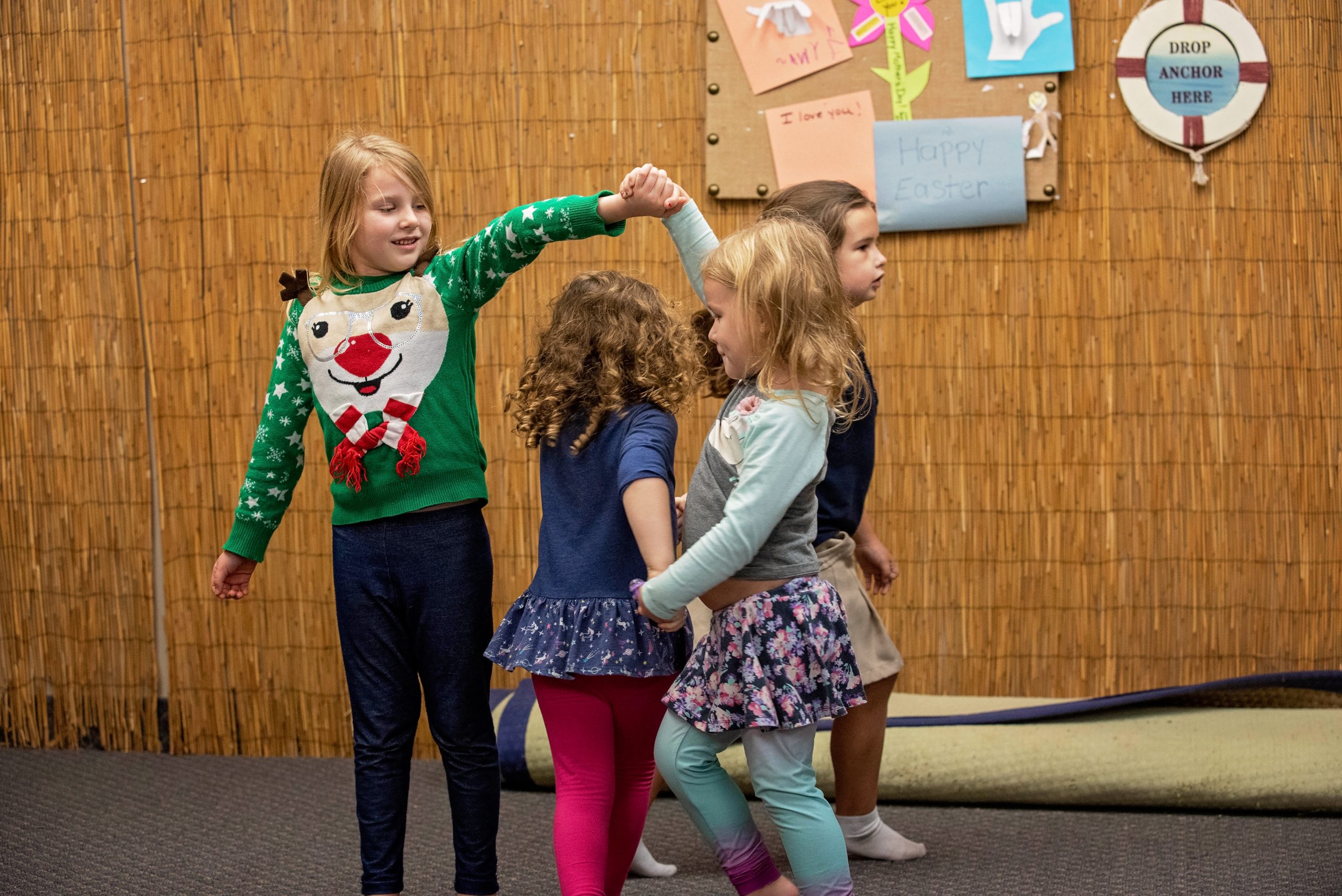 On the recent Wednesday in O’Reilly’s class, two four-year-olds, Liv Fannin and Joanna Hess seemed thrilled to be dancing together, especially when they got to hold hands. Joanna just started Irish two months ago but is already doing well, O’Reilly said. Liv has been dancing for two years.
“She picked it up and just loved it,” said Liv’s mother, Sarah Fannin. She heard of the class the way most of the parents do – through word-of-mouth. Because her mother was Irish and her grandfather danced, Fannin liked the idea of Liv Irish dancing.
Other kids, like seven-year-old Ava Kelly, went to Trinity Preschool and heard about the Irish Dancing class there. She has been dancing for three years.
Irish dancing is a large part of Irish culture, and some of the families are drawn to it partly because of that.
Three sisters, Arden, Greta, and Prudence Deckinga, six, eight, and 10, respectively, are part Irish. They love Irish dancing so much; they said they practice at home every day.
As for the older girls, some of them have been dancing with O’Reilly for six years. Like Rebekah Harold, 14, a freshman at Southeast High School. Rebekah has a background in ballet, which has some things in common with Irish dancing. She started ballet at age three, quit at nine, but then started again at 11 because she missed it, she said. She’s never taken a break from Irish dancing, though.
Rebekah said she enjoys the class, her teacher, and her classmates. Also, her father is half Irish, and she likes feeling like she is representing her heritage. Her grandmother was an Irish dancer, she said.
Serafina Colonneso, 12, in sixth grade, plays a lot of sports. Besides Irish dancing, she is currently playing beach volleyball and has participated in flag football, soccer, basketball, and gymnastics. She started Irish dancing because of a friend who used to take the class. She said that she likes that it’s active.
When she was in third grade, Lily Edwards, now 15, heard about the Irish Dance class from her mom, who works at Trinity Preschool. She thought it sounded fun and signed up. She’s stuck with it ever since, longer than with ballet, which she had taken for three years when she was in middle school.
“My dream is to do Broadway,” said Lily, who currently takes Musical Theater at Manatee High School. But she noted that she prefers dancing over acting and singing.
“I just love to dance,” she smiled.