WORDS: Shannon Evans
PHOTOS: Wendy Dewhurst & Florida Studio Theatre
You know who are experts in turning ordinary things into the extraordinary? Children. Walk with them into their little worlds, and you’ll find a puddle has become an ocean. That cardboard box has become a rocket. The living room carpet is now lava.
Florida Studio Theatre’s (FST) Write a Play program takes the sparks of imagination that only kids have and sets them center stage, turning them into real-life performances. Kids first watch professional productions, then learn to write their own. Later, many see their words come to life.
The program conveys two truths which kids need to know, both now and into adulthood—that their voices matter, and their imaginations are worth sharing.
Act One: Inspiration
For 35 years, Write a Play has introduced students across Manatee and Sarasota counties to the art of playwriting and the wonder of theatre.
The program begins each fall with the Fall Children’s Show, where schools can participate in two ways. They can bring their students to downtown Sarasota to see a play performed in FST’s professional theater, or they can host a touring production. This year’s offerings are Peter Pan (in the theatre) or Snow White (at the schools). The touring option, says Director of Children’s Theatre Caroline Saldivar, was born out of a desire to make theatre accessible to every child, regardless of distance or resources.
“We love when they can come here and see a show,” she says. “But we also want to make sure no child misses the experience because of geography. If we can’t bring them to the theater, we’ll bring the theater to them.”
Act Two: Time to Play
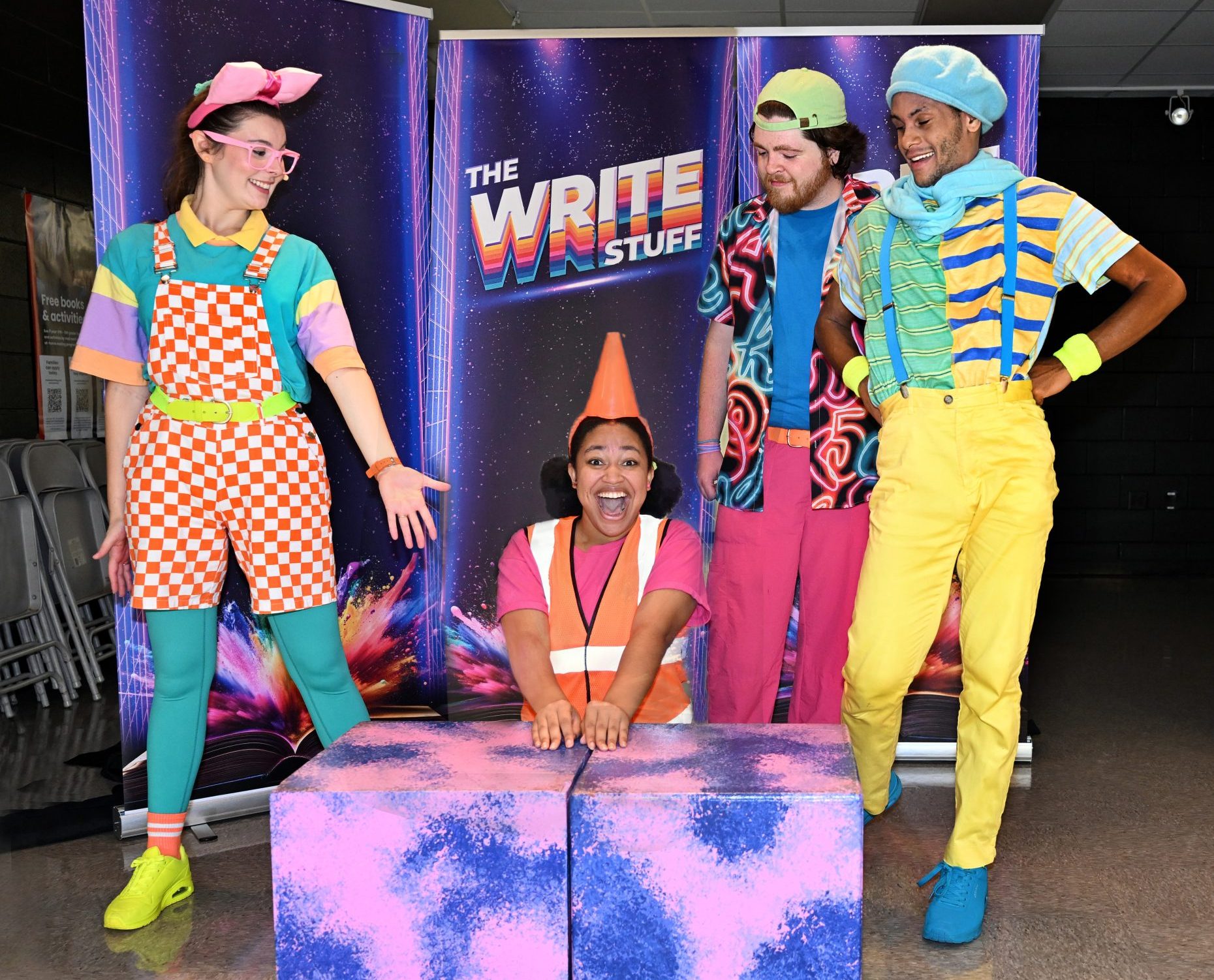
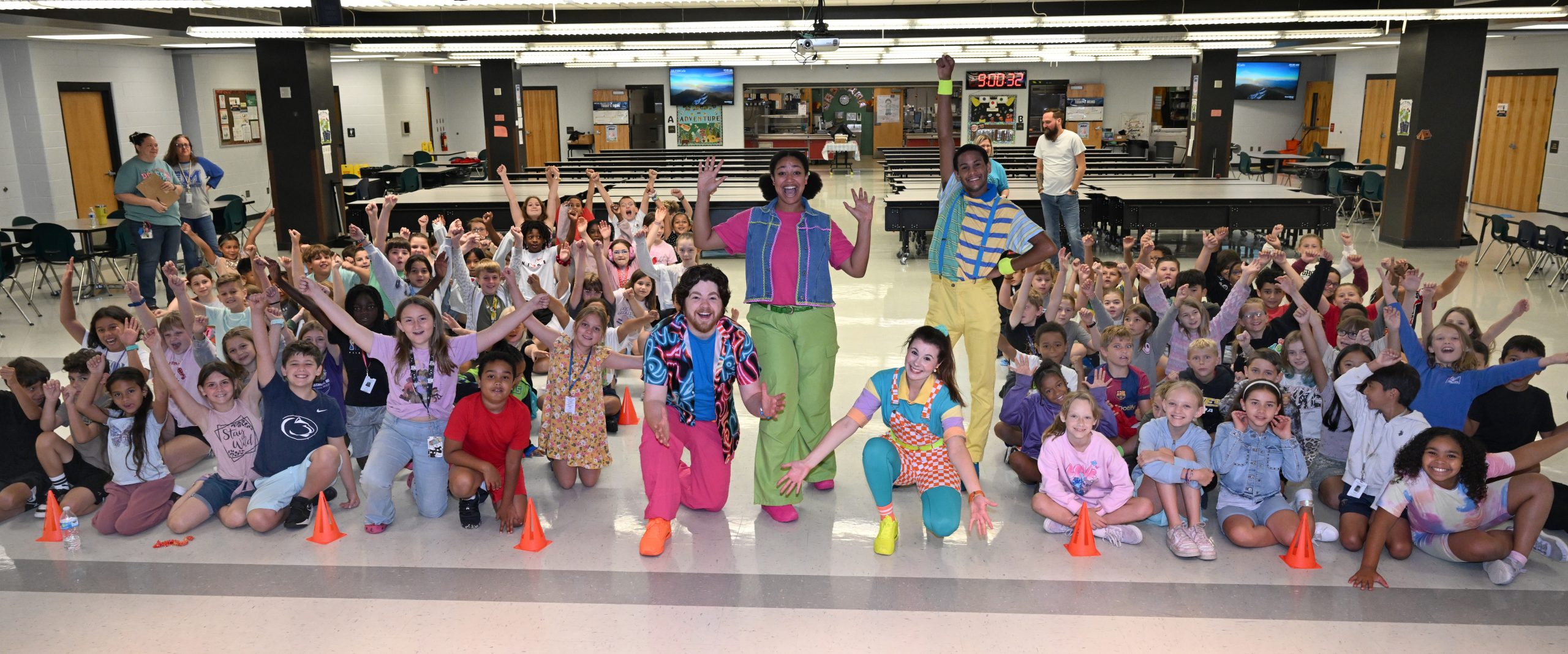
Both versions are the beginning of a creative journey that continues all year. Once students experience a live performance, FST’s Playmakers troupe visits their schools. The Playmakers perform short plays written by past students, then invite the audience to help create an improvised story on the spot.
“If a child says, ‘The character is an ice cream cone that’s afraid to melt,’ our actors build an entire play around that idea,” Saldivar explains. “They’ll include character, setting, conflict, and dialogue—everything you need for a story.”
The kids call out ideas and even join the performers on stage to act out scenes or make sound effects. After the show, one of the actors leads the class in writing a group play together on the board. Everyone contributes, and no idea is dismissed. Every child can succeed, the Playmakers tell them, because every child is a natural storyteller. The actors just help them see that their imagination can have structure.
Teachers get curriculum packets to continue the lessons in the following weeks, and then students can write their own short plays—individually, in pairs, or as a class—and submit them to FST’s Young Playwrights Competition. Every spring, FST’s staff gathers for a daylong Readathon and reads every submitted play at least twice. They receive entries from more than 5,000 playwrights around the world (sometimes submitted by a pair or group), but only choose a dozen winning plays.
Act Three: Lights Up!
Next, professional actors produce and perform the plays during the annual Young Playwrights Festival. Winners get to walk the red carpet and attend a luncheon, then receive medals during an award ceremony. Teachers and principals join the kids and their parents for the event.
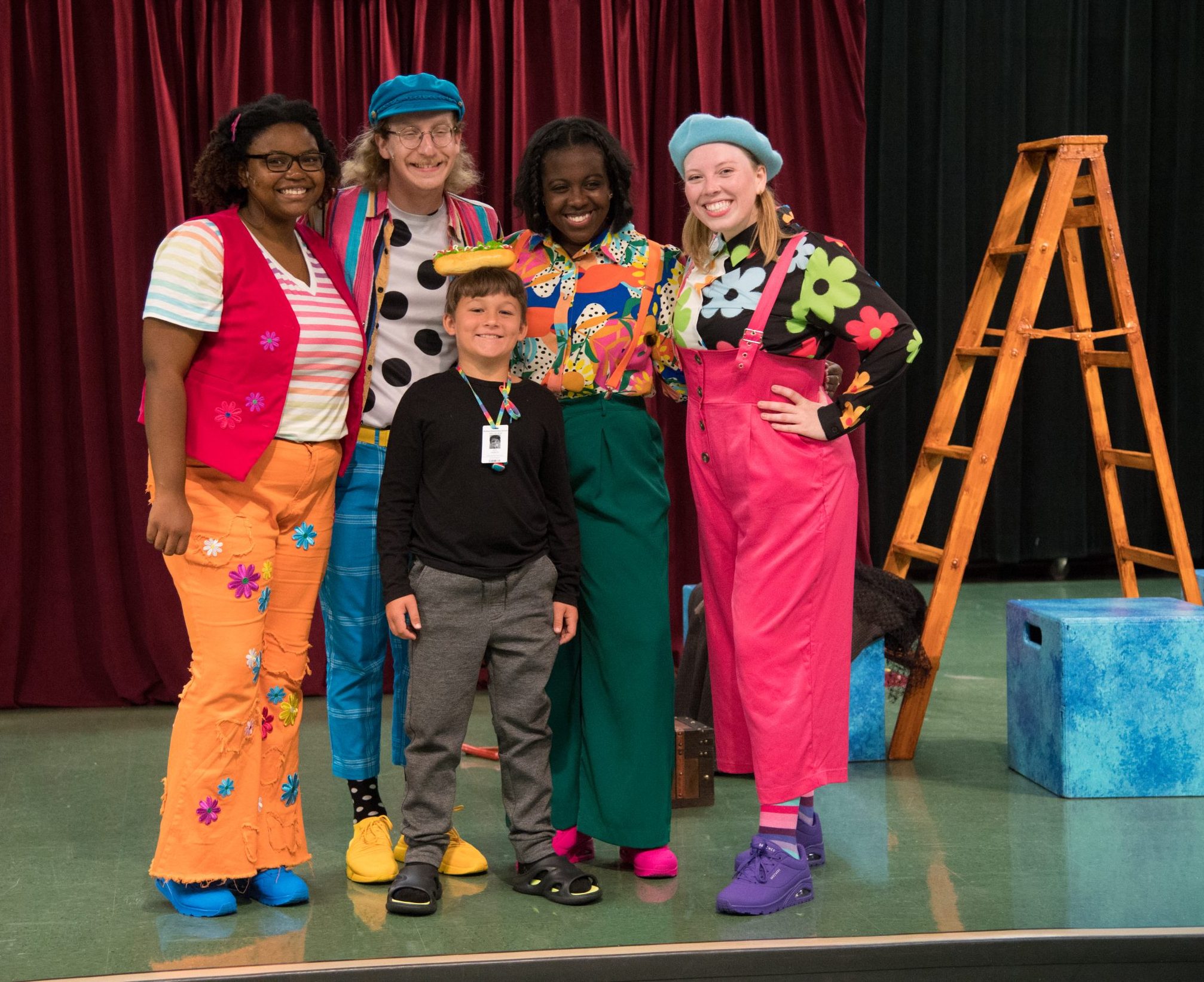 “It’s powerful to see a parent realize, ‘My child wrote this,'” Saldivar says. “They’re seeing their children in a new light.”
One memorable winning entry written by third-grader Calen Magnant of McNeal Elementary stood out for its pure creative whimsy. His play, Hot Dog Farm, tells the story of two boys fishing in a magical pond in ‘Manatee, Florida’ where they catch hot dogs instead of fish. When they finally use ketchup as bait, the pond explodes in a shower of hot dogs raining from the sky.
“It’s only something a child could dream up,” Saldivar says, “and it has every element of great storytelling.”
After his win, Calen couldn’t wait to tell everyone about his play. “He was a lot more confident afterward,” his mother Annie says. “It taught him that it’s worth trying something new—you never know what opportunities might come from something you already love to do.” When Calen was asked what he’d say to other kids who might want to write a play, he said, “Do it! You might just win.”
Other winning plays have explored friendship, family, loss, or the frustrations of everyday life. What matters most is that the play shows a unique point of view. It can be serious or silly, but it has to sound like something only a child could write.
Act Four: Confidence Takes the Stage
With support from the Bishop Parker Foundation, FST continues to expand its reach in Manatee County schools. More schools will soon join through new after-school programs. Not every student who participates dreams of becoming a playwright one day, but that isn’t the point. The real goal, Saldivar explains, is to help children gain confidence in their ideas.
“We want them to see the value of their own imaginations,” she says. “They don’t have to wait until they’re grown-ups to share what they think or feel.”
The process is not solely geared towards extroverts, either. For any kids who might be shy or uncertain about sharing their ideas, FST’s teaching artists use a gentle, inclusive approach, validating every idea—even the unexpected ones. Group exercises like “yes or no” voting allow quieter children to participate without feeling pressure. And for students who physically struggle to write, the teaching artist becomes their “hand,” writing down the story as the child dictates. They work with children of all abilities, believing everyone deserves the joy of seeing their story told.
And the results are often transformative.
Act Five: Standing Ovation
Beyond writing skills, Saldivar describes how the Write a Play program helps build empathy.
“When children imagine what their characters are feeling or thinking, they’re practicing putting themselves in someone else’s shoes,” she says. “That’s an important life skill for all of us.”
 Every child who takes part in the playwriting competition, whether they win or not, receives a certificate celebrating the effort of developing an idea and putting it into words. And the longevity of the program itself speaks to its impact. Many parents in Manatee County remember writing their own plays as elementary students decades ago and now get to watch their children do the same.
Kids today have endless ways to stay entertained, yet they get few opportunities to create something from their own imagination. Write a Play gives them that chance. When students invent characters and shape dialogue into a finished story, they learn to think deeply and to express ideas confidently. Creative thinking and empathy can go a long way in guiding a child through challenges.
Watching their ideas go from page to stage is an experience like no other. It’s difficult to describe, but maybe the pride in these young playwrights’ eyes tells the story best.
Get Involved
If your child or classroom would like to participate in the Write a Play program, email writeaplay@floridastudiotheatre.org or visit https://www.floridastudiotheatre.org/childrens-theatre/in-the-schools/elementary.
FST also offers productions on weekends for families. Even if a child’s school isn’t part of the program, they can still see Peter Pan, Snow White, or the new show, The Pirate Ship and the Sea Monster and Other Winning Plays. A special holiday show, Deck the Halls, runs through Christmas Eve and is open to school groups during the week or families on weekends.
Visit www.floridastudiotheatre.org for upcoming schedules and information about educational programs.