WORDS: Shannon Evans
PHOTOS: Suncoast Credit Union Foundation
When was the last time you held a penny? As a child, thrilled to spot that flash of copper on the ground? Or maybe you were sorting through a handful of change from a cashier (and remembered why you usually use a card). Perhaps you dropped the pennies into a tip jar, glad not to weigh down your wallet.
Pennies don‘t count for much these days; the U.S. Mint has even decided to suspend their production. But small amounts can accomplish big things when they come together. The Suncoast Credit Union founded its charitable foundation with that idea at its heart.
 Since 1990, the Suncoast Credit Union Foundation has turned everyday card use into valuable support for children and families in the communities Suncoast serves, including Manatee County. Each time a member uses a Suncoast debit or credit card, four cents go to the foundation. While no one handles actual copper pennies in these transactions, the model still points to the power of a cent. Those small contributions have added up to more than $61 million in giving, including more than $3.5 million in scholarships for students pursuing higher education.
To keep that impact close to home, the foundation separates its funding by region. That means dollars generated through everyday transactions in Manatee County go back into local organizations. And the more that members use their cards, the more funding flows back into the community, which creates a steady cycle of giving that grows over time.
Jeffrey Kunberger, who became Executive Director of Suncoast Foundations in 2025, has worked with the credit union for eighteen years, including three years on the grants committee. He has watched these four-cent contributions create opportunities for countless families and students—and he wants to make sure members, both current and potential, understand their role in how it works.
“It‘s important to us that the pennies stay local,“ Jeffrey says. “If you live in Manatee County and use your card at Target or Publix, you’re helping us do good in your own community. We want our members to feel good knowing they‘re making an impact through their normal spending.“
So where exactly do all these pennies go?
In its early years, the foundation focused mainly on scholarships, awarding modest amounts to local students and handling applications on paper through Suncoast branches. But eventually, that effort widened to grants for schools, education foundations, hospitals, and other nonprofits serving children and families.
 Today, Jeffrey describes the foundation‘s focus as ‘cradle through college,‘ with priorities including child hunger, early literacy and kindergarten readiness, trauma counseling, and post-secondary education. They fund organizations that hold 501(c)3 status, have operated for at least two years, and can demonstrate stability. Because Suncoast wants to steward its members‘ dollars wisely, it favors programs that reach the greatest number of people with the funds available. A few local partners include the School District of Manatee County, Manatee Education Foundation, Take Stock in Children Manatee, Meals on Wheels, and State College of Florida.
Early learning remains one of the foundation‘s clearest priorities. “We know kindergarten readiness is a huge factor,“ Jeffrey says. “Children who start school ready to learn are more likely to read proficiently by third grade and stay on track in math by fifth. Those early gains often carry through to graduation.“ For that reason, Suncoast invests in programs that reach children early, before they slip behind. “Children not ready at the start often fall behind,“ Jeffrey adds. “That affects whether they graduate and eventually enter the workforce prepared.“
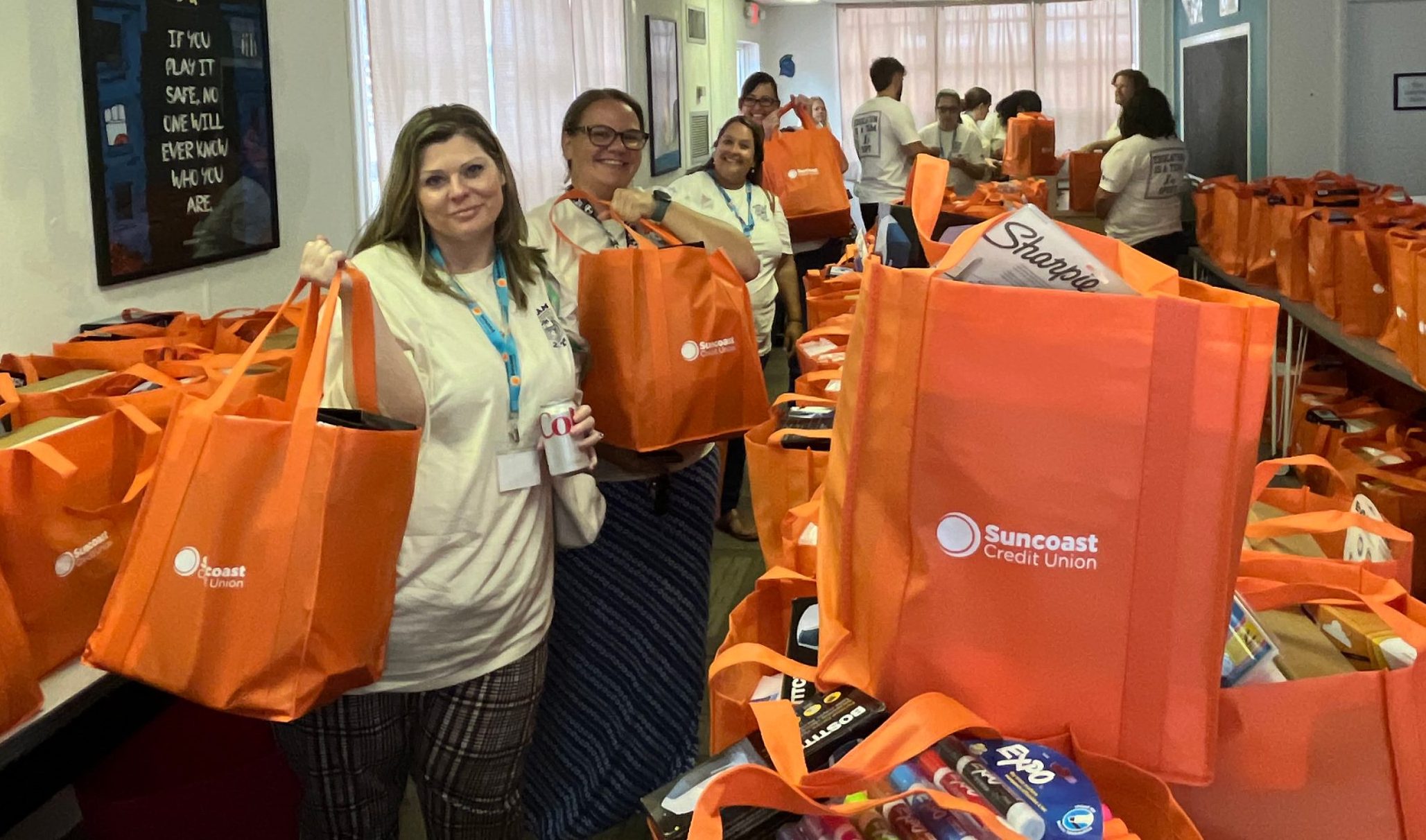
The foundation‘s education work extends beyond early childhood and reaches classrooms across grade levels. In Manatee County, that includes programs like the district‘s STEM Showcase, which gives students a chance to tackle hands-on science and engineering challenges. It also extends to new teachers, who receive supplies as they prepare their classrooms for the year ahead.
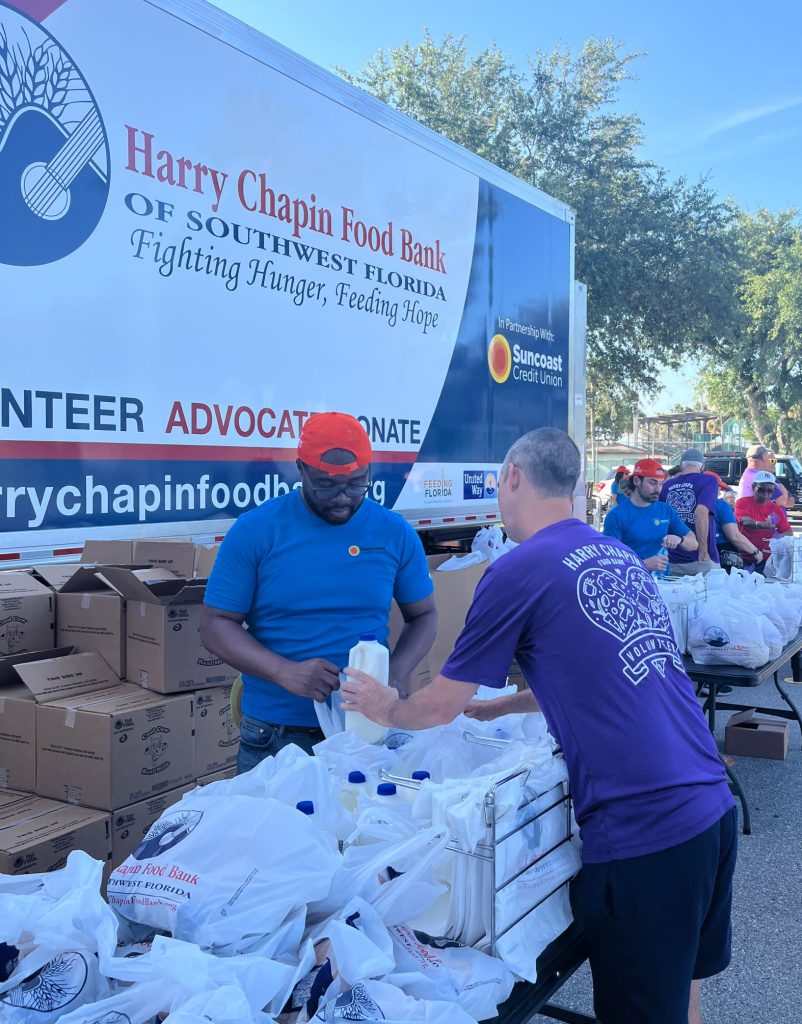
Another focus is childhood hunger. During the summer, many kids lose the dependable breakfasts and lunches they receive at school. That loss puts more pressure on food banks and meal programs, and it gives those four-cent contributions another way to make an impact. Suncoast has supported the Harry Chapin Food Bank and sponsored a refrigerated truck that brings food directly into the community and helps reach families who might otherwise go without it.
 As local, state, and federal funding shrinks, the foundation has stepped in to cover needs once met elsewhere. That response portrays Suncoast‘s broader view of a financial institution‘s role in the community it serves. Here, Jeffrey points to one key difference between credit unions and banks: banks operate under Community Reinvestment Act requirements that legally require them to invest in their communities, but credit unions don‘t. In Suncoast‘s case, he says, the decision to give back comes from a sense of responsibility and from a belief that improving community life comes with the job. He sees the foundation as an extension of the credit union‘s larger mission to improve the financial lives of its members.
Asked what he hopes changes for the children and families the foundation reaches, Jeffrey settles on one word: opportunity. “We hope they have opportunities they wouldn‘t otherwise have had,“ he says. “That could mean the opportunity to attend college debt-free or with less debt. It could mean access to a medical procedure they otherwise could not afford. At the heart of it, we want to create opportunities for kids to be kids, and then to grow up to be great citizens of Florida.“
The foundation‘s story has grown far beyond what its founders first imagined. Jeffrey believes they would feel astonished by its reach.
“It would surpass all their expectations to see how much good has come from this idea and how many lives it has touched,“ he says. “I would thank them for thinking outside the box. We want to keep building on that.“
The penny may be disappearing from everyday life, but its value has not vanished everywhere. In the right hands, even the smallest amount can add up to something powerful.