WORDS: Shannon Evans
PHOTOS: Katelyn Disbro & Soar in 4
Across communities, certain places quietly shape the future. Libraries do it through books; parks do it through play. But Soar in 4’s new Soar Lab in west Bradenton brings learning and play together, promoting early learning standards and showing families how fun can build the skills children need for school.
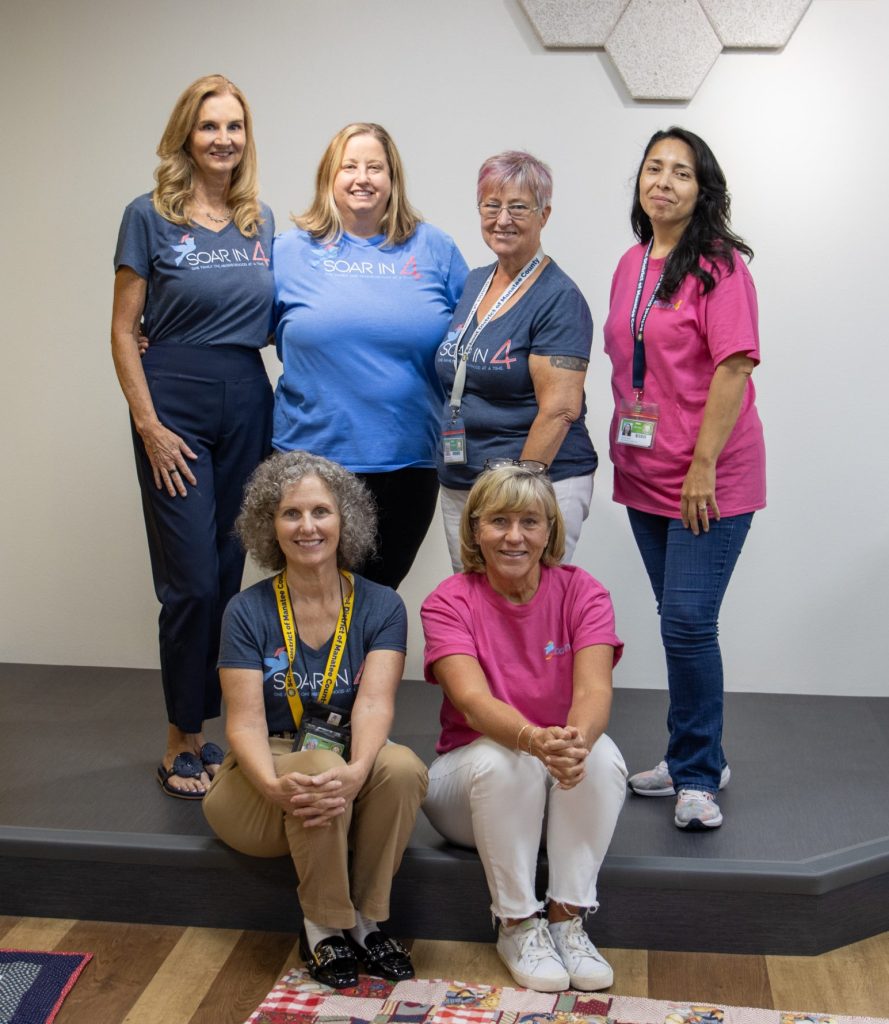
Dr. Sheila Halpin, Director of Early Learning for the School District of Manatee County, played a major role in bringing the Lab to life. She spoke about how the space turns the idea of “school readiness” into something joyful and tangible.
“We’re different than a children’s museum,” she said. “At a museum, you may or may not learn something intentionally. Here, everything you do is based on standards for four-year-olds. We want families to have fun, but also to know they’re learning all the way through.”
So, without further ado, let’s start the Soar Lab tour!
Spaces That Spark Curiosity
The moment you walk in the main door, the learning and fun begins. The lobby itself has a train table and a magnet wall where kids can play while their adult checks in.
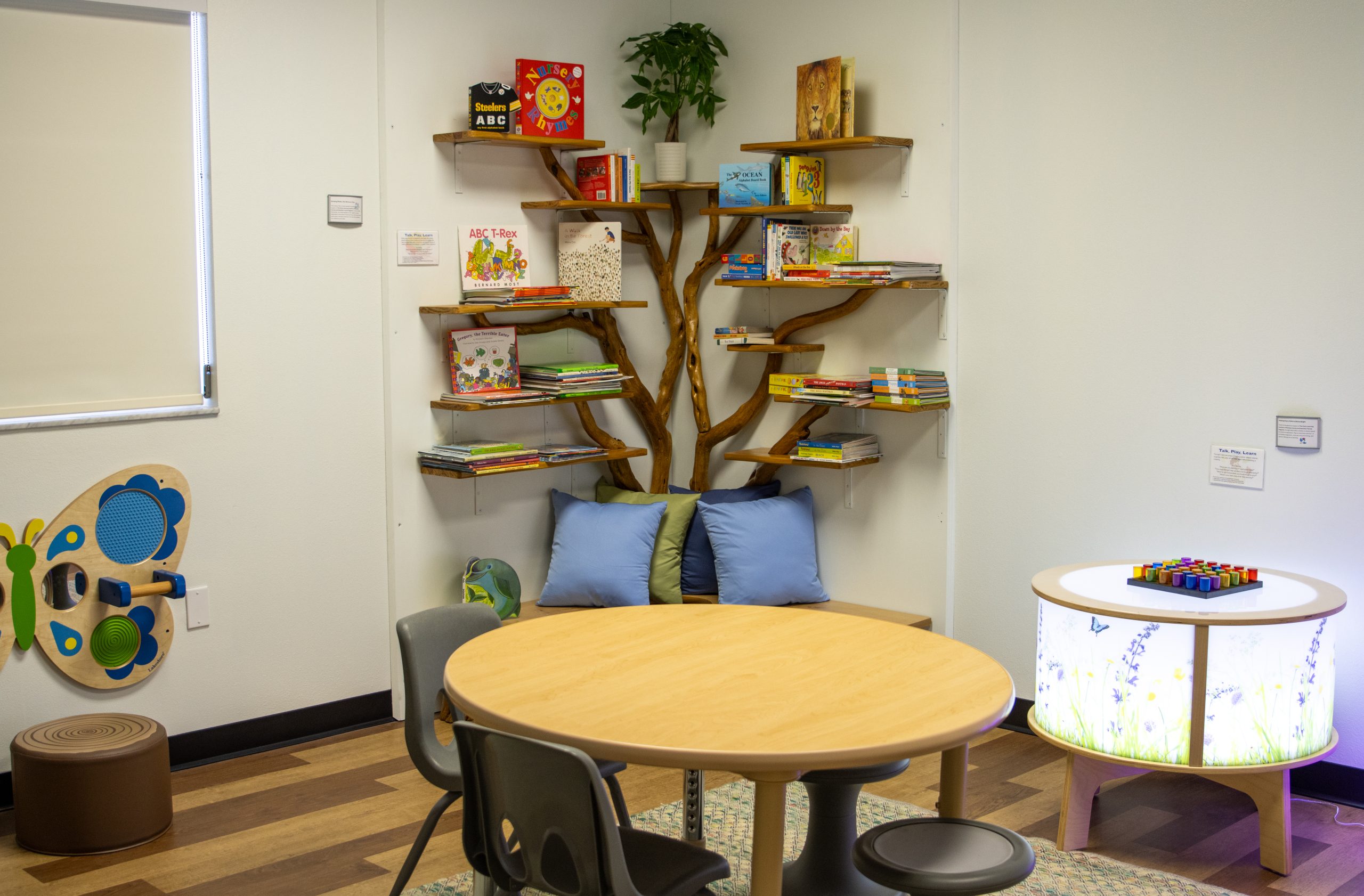
The first stop is a room called The Thinkery, a comfy, quiet spot with puzzles, books, and board games. Families can check out packets of games like a library book and take them home.
 One of the Soar Lab’s main goals is to encourage adults to better engage with their kids. Besides the many ‘no phone’ zones, there are question prompts on the walls, asking things like, Can you tell me about the story or picture in this book? What do you think might happen next? or What part of this activity made you feel excited or proud?
Prompts in English and Spanish even hang above the bathrooms’ changing tables. “Learning doesn’t have to wait until school,” Dr. Halpin said. “Every activity with a child can be a brain-building moment.”
Next, we come to the ‘How Tall Are You?’ wall, where you can measure yourself with unconventional units like handprints, shoe prints, or spoons. In the Tinkering Center, which has been a favorite during their soft opening events, kids can explore with loose parts, beginner hammers and mallets, or take apart toy dinosaurs and then screw them back together with plastic drills. Older children can make objects with 3D printers along the back wall or give code instructions to a robot. And like many activities in the Lab, literacy shows up, like in the way kids can hammer pegs to form the letters of their name. Every area also holds reading spaces and light tables.
“We encourage the ‘plan, do, review’ method,” Dr. Halpin explained. “Kids plan what to use, create something, and then reflect on it.”
There’s no wasted space in the Soar Lab; even the hallways hold meaningful learning opportunities, with wall-mounted activities like magnet boards, a large manatee with different textures, wooden gears you can move, and more question prompts. Kids can play with a felt board map of Bradenton, complete with a ballpark, beaches, and, of course, a little Soar Lab.
In the Engineering Zone, kids let their imaginations fly with Legos, MagnaTiles, and a bigger train table. They can watch gravity in action as they zoom little cars down a long ramp. Giant foam blocks offer the perfect materials for building forts or toys. What structures can you build today? a sign on the wall asks. How do you think different shapes and sizes can help you create something unique?
If anyone needs a break, a soft-lit sensory room offers a quiet space with pillows and objects for tactile play. An outside area (still in progress) will have a tricycle track, telescopes, and picnic tables where field trip groups can eat lunch.
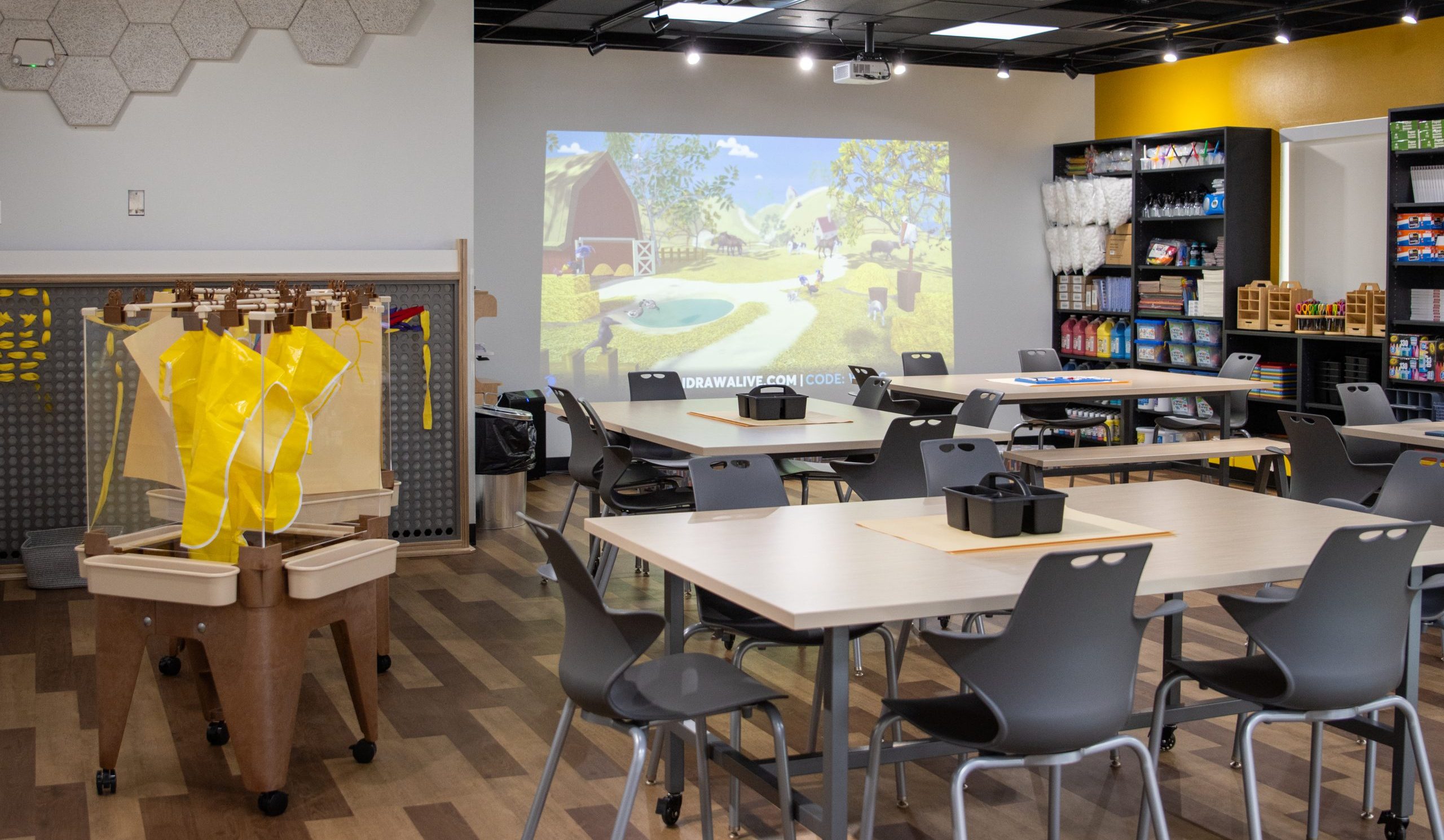
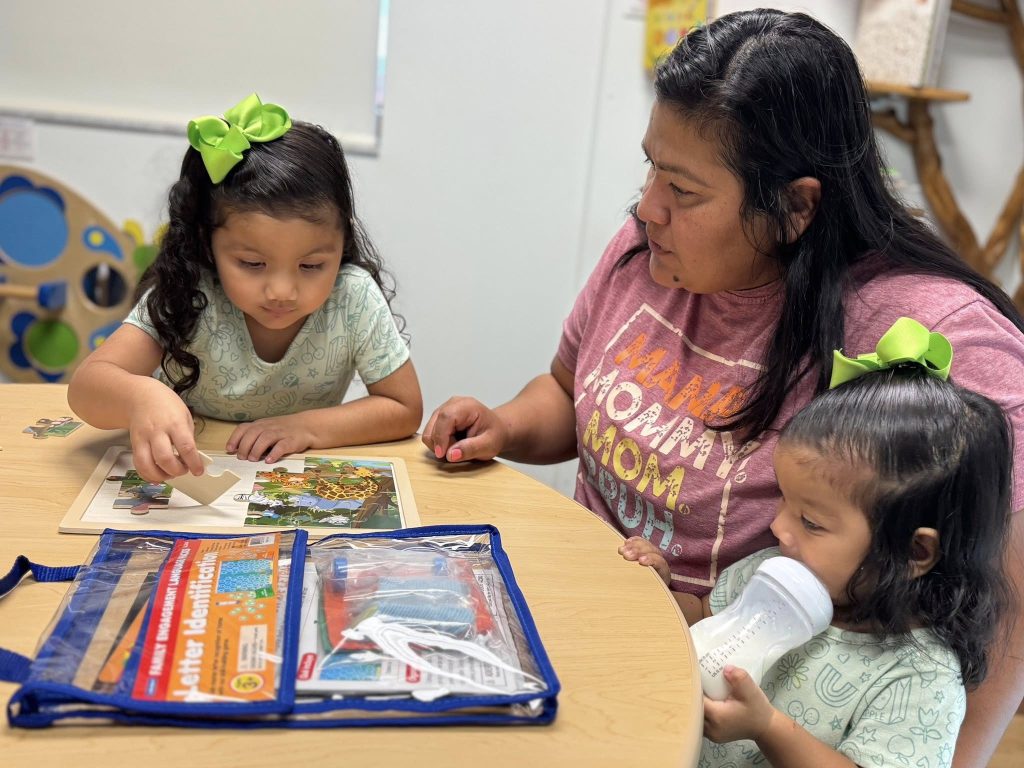 And let’s not forget the messy art area! It’s a budding artist’s dream space, with easels, paints, weaving looms, and even shaving cream activities. “We start with chunky crayons for younger children who may not have been in pre-K yet, and provide smaller ones for more advanced fine motor skills,” Dr. Halpin said. In the same room, kids can play on a mini stage and dress up in costumes. A projector on the ceiling casts interactive games across the floor.
One popular activity here is the “Draw Alive” station, where kids color a character, scan the paper, and watch it appear in an animated scene on the screen. Staff can switch between dinosaurs, ocean life, safari, the Arctic, winter, transportation, and fantasy themes. Even toddlers who scribble can see their work come to life.
There’s no doubt about it: This is a child’s wonderland. This is the kind of place that reminds you what learning is supposed to feel like.
Play With Purpose
At first glance, without the detailed explanations, the Lab might look like a giant playroom. But staff want parents to see—and share with their kids—the learning in every space. There’s math in the block tower, literacy in the puppet show. There’s science in the rolling ramp.
“The goal isn’t to push academics too soon,” Dr. Halpin explained. “It’s to show that play itself is learning.” And the reason for that feels urgent. “We’re noticing more children coming in who don’t know how to play. Instead of rocking a baby doll, they’ll throw it across the room because they don’t know what else to do. We want to help change that.”
When it comes to learning, everyday moments matter. Count the people in the grocery line, staff suggest. Point out the red car, the green tree, the blue sky. Compare the sizes of rocks along a path. None of it looks like teaching, but all of it builds language and memory, plus a stronger bond with the adult.
 Staff now welcome field trips from all 112 VPK classrooms in the county, along with ESE classes and kindergarten groups from nearby Title I schools. The Lab recently hosted its first little visitors, the VPK students from Gene Witt Elementary. And the Soar Lab has become a gathering place for more than just children. A local bank that donated materials now plans to host an employee event there. Adults with disabilities contributed artwork for the walls and now request their own play sessions. School Advisory Councils and community groups meet in the Lab and often stay afterward to have some fun.
The Lab has benefited educators, too, giving them tools to engage with their students. One day, eighty teachers and paraprofessionals filled the Lab for hands-on training. They left with new ways to stretch kids’ vocabulary and to ask sharper questions.
Before you leave the Soar Lab, you’ll find a “Learning Tree,” by the front door, where adults write down what they learned during their visit and pin their thoughts to the branches. Some of the notes are practical, some funny, most of them heartfelt. It’s a meaningful visual. Adults might bring children to the Soar Lab in search of fun, or distraction, or something to do—but here everyone ends up learning something new.
Give curiosity a place to live, this place promises, and it will surely take off.
Plan a Visit
Admission to the Soar Lab is free for many families, including School District of Manatee County students in pre-K through third grade with a parent or caregiver, district staff visiting with a young child, and families who qualify for programs such as WIC, EBT, SNAP, or Medicaid. Children ages four and under also enjoy free entry with an accompanying adult.
Donation-based options are available for others, starting at $5 per visit or through annual passes that support the Lab’s ongoing programs. All donations help fund Soar in 4’s early learning initiatives across Manatee County.
Visit www.soarin4.org/soar-lab for more information and opening hours, which may vary each month.