WORDS & PICTURES: Gabrielle Versmessen
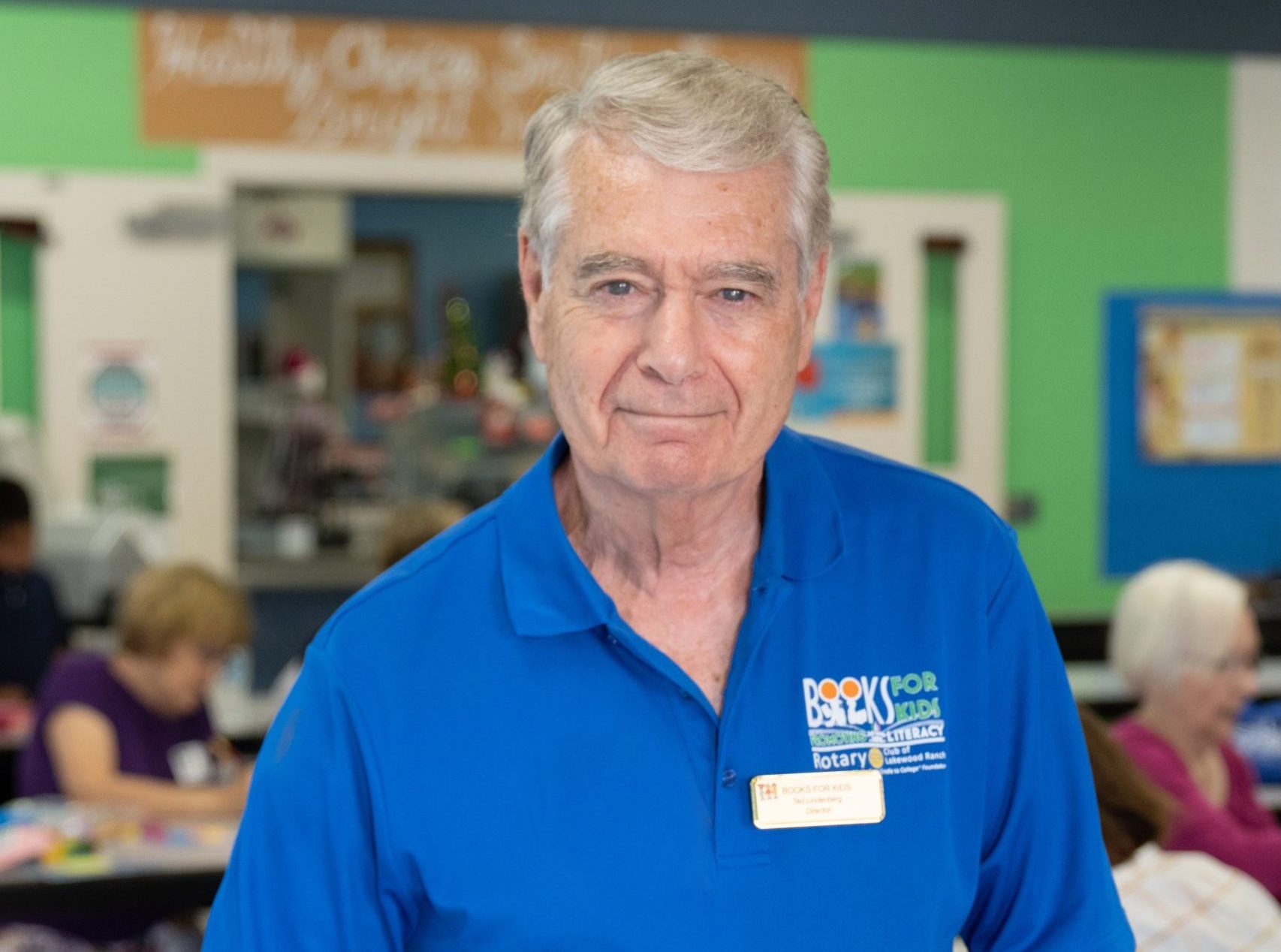
When Ted Lindenberg moved to Lakewood Ranch, he wanted to find a way to help people, especially in the process of reading. He joined a literacy council in Sarasota whose objective was to work with adults who have difficulties reading. However, while he found the organization wonderful, it wasn’t quite enough for him; he needed to help children. Thus, Books for Kids was born.
He says: “My whole background is with children and making a difference in the lives of children. I wanted to begin a program to help boys and girls read more effectively.” Ted’s extensive educational background, from teacher to counselor to the school principal to district administrator, fostered his appreciation and passion for educating young ones.
Books for Kids became a program under the Rotary Club of Lakewood Ranch as Ted wanted a new way to engage members and the Club to make a difference in the community. Books for Kids started as a book distribution program nine years ago, where they brought a number of books to the schools, and every child in the school received a book. Today, the program is split into two entities: a pilot kindergarten program and a first, second, and third-grade program.
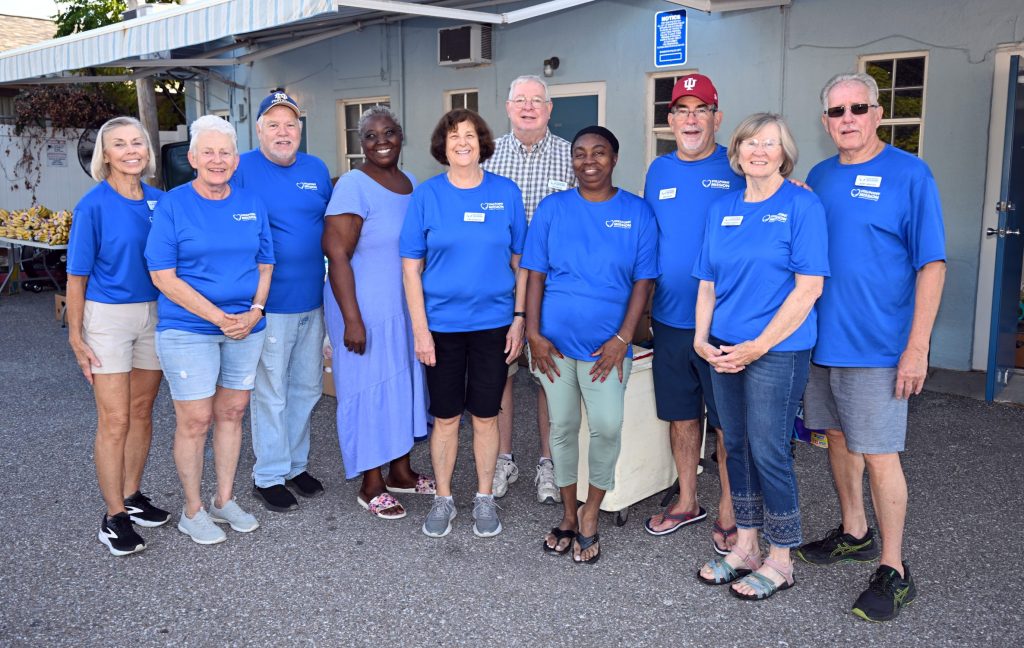
It takes a team of volunteers working many hours over multiple days to make Books for Kids the success that it is. On a Saturday, the books get delivered in boxes to the Annex building at the Early Learning Coalition of Manatee County. About 20 volunteers then take approximately 4,000 books out of the boxes and label them. The label has information for the parent, like parent tips, on what they can do to help their child’s reading comprehension. After they label the books, the volunteers put them away on shelves in the Annex.
Then, on a Tuesday, volunteers take the books from the shelves and place them into 125 different bags. Each bag has a teacher’s name and the school on it and contains a read-aloud book with questions pertaining to the book. Wednesday mornings are for volunteers to pack up the bags in their cars and distribute them to 10 different Title I schools throughout Manatee County.
“I’ve always wanted to make a difference in the lives of these children, and I think we are,” Ted says. “We had one student try to give their mentor a nickel, and the mentor had said, ‘Oh no, thank you, I don’t need that.’ The child said, ‘I just need to say thank you, and I don’t have anything to give.’ The mentor replied, ‘Just what you did just now to say thank you, that’s enough for me.'”
 Another student at Oneco Elementary School had greatly improved his reading comprehension. His Books for Kids mentor asked him if his parents were reading with him at home. He said: “No, I’ve been taking the books you give me and practicing every night.”
While some mentors are Rotarians, most are local community members. One might also think that a mentor would have to have a background in education, but most do not. Ted invites anyone interested to volunteer. Mentors go through a background check and then a training session so that nobody goes into a classroom without the proper training. The training consists of a lesson plan, what drives the lesson, the materials they’re going to receive, how to talk about literacy, making it fun for the students, and explaining how impactful their relationship is with the students.
Diane Thomas is one of the mentors for the kindergarten pilot program. “This is my first time working with the Rotary’s program. One of this program’s wonderful advantages is giving the child a book. Sometimes these are kids who don’t have books,” Diane explains. “It also exposes children to a higher level of vocabulary. Children can learn any word you know, even ones you don’t want them to know!”
Ted says that while he would love to be on the Today Show speaking about Books for Kids, he would not be able to run the program without the tremendous support of the school district, principals, and teachers, as well as the many volunteers.
Kindergarten Pilot Program
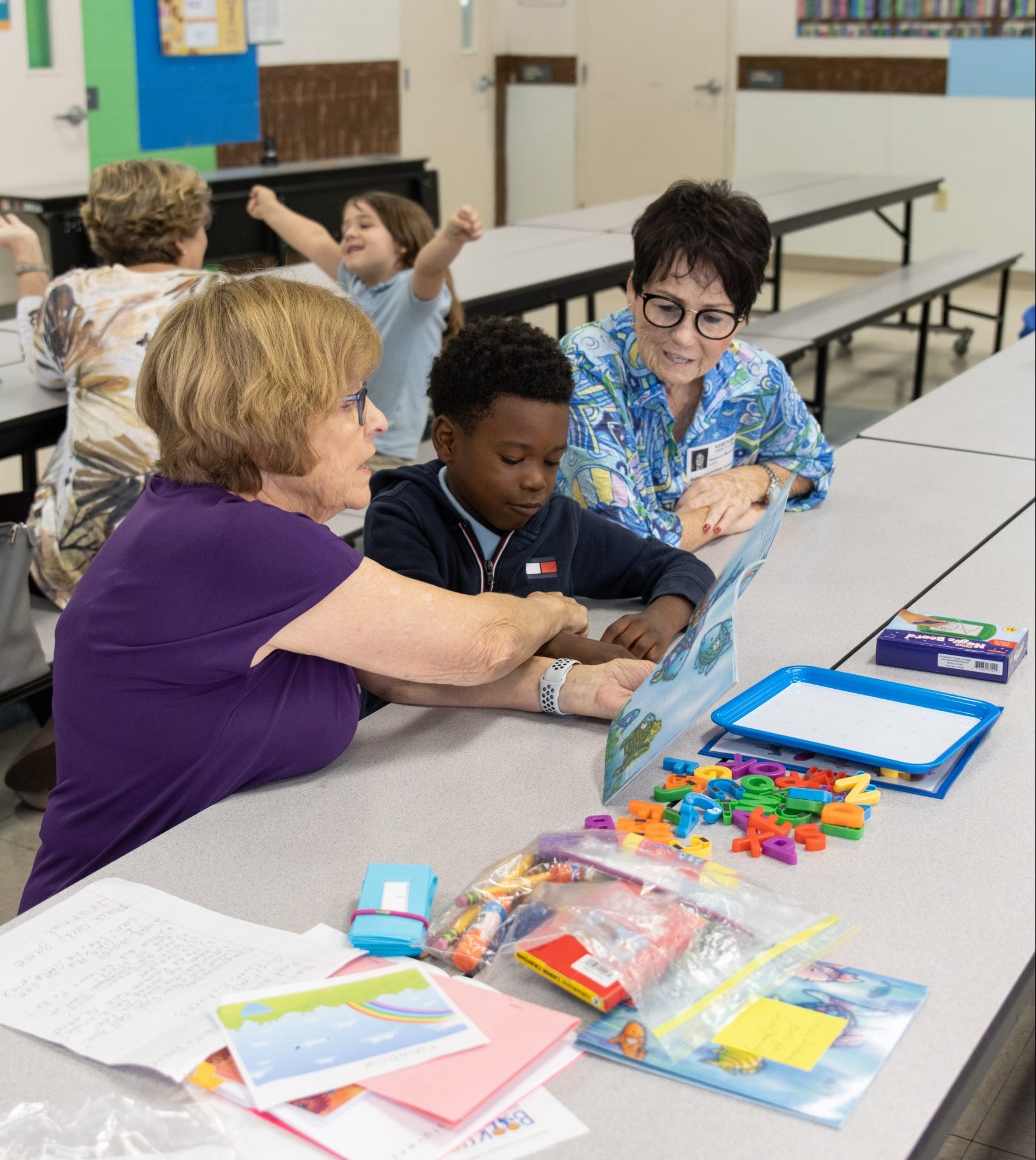
The kindergarten pilot program of Books for Kids was made possible by an increased net investment from the Early Learning Coalition of Manatee County of $50,000. The program has been ready to launch for two years, but due to the Covid restrictions, it was pushed back to launching this year. It is being implemented in three classrooms across three different Title I schools in Manatee County. These mentors meet with the kindergarten students once a week for 21 weeks from October to the end of April, and they work with the same child every time.
The goal is to provide early intervention for the children and to have a one-on-one experience with a mentor while also providing books for their at-home library. Sadly, a lot of these children don’t have books at home. So, at the end of the school year, the students will have 21 high-quality books they’ve taken home after each session.
There are many benefits to the one-on-one relationship between student and mentor. One is that the mentor can fully explain the vocabulary and sight words that are being introduced. For example, what does ‘friendship’ or ‘lonely’ mean, or what are the scales on a fish?
Joanne Vernon, one of the coordinators for the kindergarten program, describes this process as a “development of vocabulary, writing, and reading.”
 The students read at various levels, so the more advanced students can do more with their mentors to further their skills, and the students that struggle are getting the needed attention to improve. Each mentor adapts their lesson plan to meet the child’s individual needs.
Included in the lesson is the use of manipulatives like magnetic letters and writing journals to build upon their vocabulary. The power of play makes the lesson more engaging and interactive so that the students don’t just sit reading a book.
Susan Trivilla, another coordinator for the kindergarten program, talks about how one mentor, Deborah, went out of her way to do something special for the kids: “We had read a couple of books about bears, and Deborah’s community group crocheted a bear for each child. They don’t always get something other than the book, but they’re building connections from the literature to various things in addition to building a relationship with their mentor.”
While the books don’t necessarily coordinate with the teacher’s classroom curriculum, the books’ themes align with what the children are learning in kindergarten, such as friendship, empathy, and helping one another.
Karen King, a kindergarten teacher at Ballard Elementary, notices a big difference in her students. “They’re more confident and excited about reading. When we’re reading in class, they’ll incorporate, ‘Oh, I remember learning that with my mentor!’ They’re starting to make connections with it.”
Ms. King says that her students needed this program a lot: “The socialization aspect impacts the children in knowing that someone else is in their corner that’s there for them and cares. They even ask when they will get to see the mentors again.”
One of her students, socially, tries to have a tough exterior but is one of the first to ask about the Books for Kids program every week. Ms. King even says he is more confident now and actively wants to learn and participate.
Another student was a little shy with her learning, but Ms. King noticed her “taking off” with her sight words. “Between me, working with her mentor, and her mom at home, it’s just been this positive thing for her where I’m seeing this great growth,” Ms. King says.
“I may be reading a different book in class to teach our standard, but they’re using what they’ve learned here (in Books for Kids) to help. They have that foundation now. It all works and weaves together.”
The Superintendent selects the schools that Books for Kids is participating in then the school’s principal chooses a kindergarten teacher. Sixty mentors volunteer between Ballard, Daughtry, and Oneco Elementary schools.
The goal for the kindergarten program is to have more volunteers so that they can add even more classes.
1st, 2nd, and 3rd Grade Program
Originally, Books for Kids was just the first through third-grade program, with five volunteers going into five classrooms and distributing 300 books per month. Today, nine years later, 125 volunteers are going into 125 classrooms and distributing 4,000 books per month. Last April, they distributed their 100,000th book.
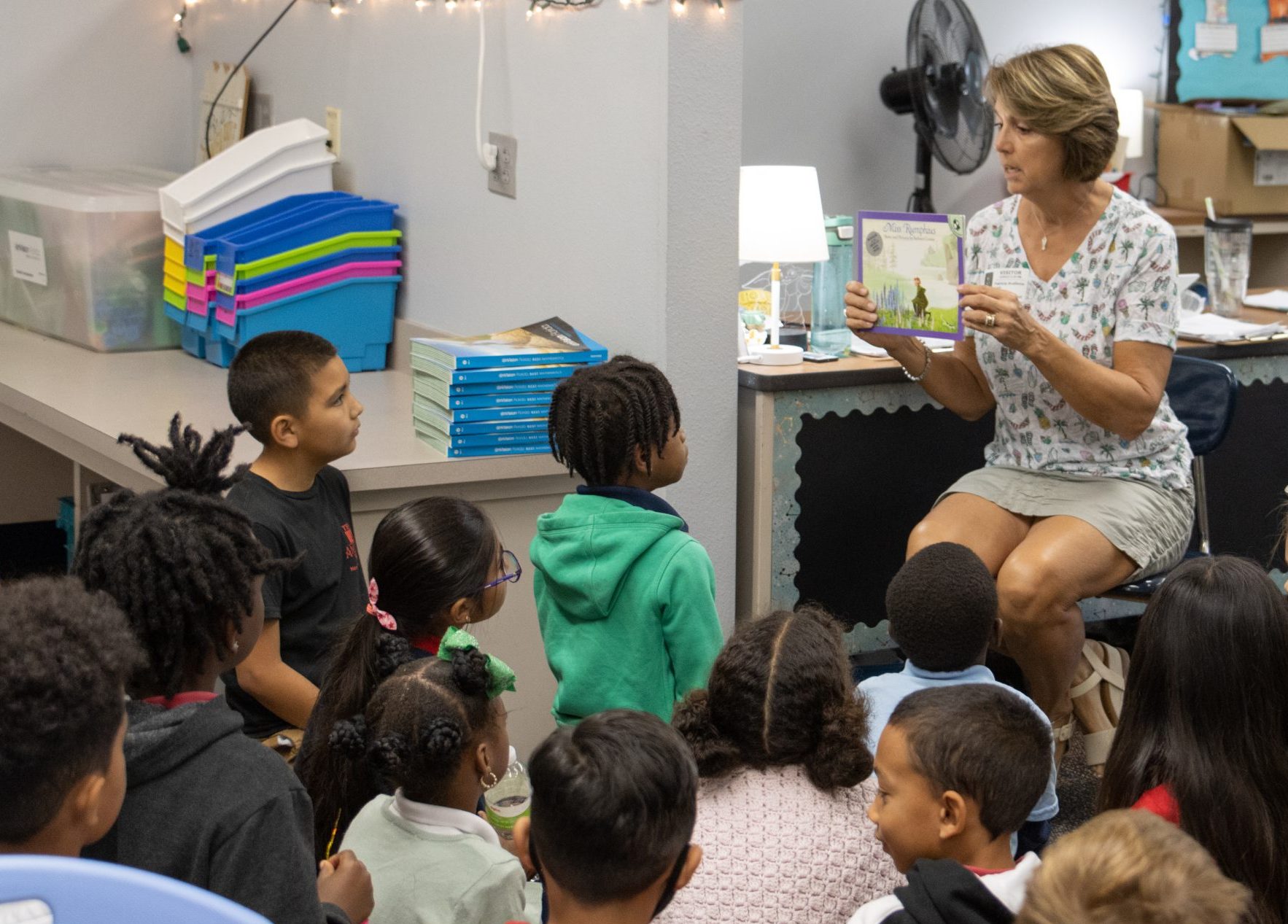 This program is different because one volunteer will go into a classroom once a month and read a book to the entire class. This volunteer will return to the same classroom each month. While the volunteer reads the book, they will associate the themes of the story with real-life details and ask engaging questions to assist in comprehension.
“We wanted to allow volunteers to participate once a month so that it would be easier to accommodate their various schedules. Many of our volunteers still work,” Ted explains.
Like the kindergarten program, each student gets to take home a copy of the book the volunteer reads to them. This means that throughout the school year, the children will receive eight books for their at-home library.
Even with a monthly visit, the students still build a positive relationship with the classroom mentor. The volunteer brings more of themselves into the classroom as the relationship becomes more established. One important feature is that they’ll talk about their occupation or what they’ve done as a career, which provides career education exposure for the students.
Ted says: “We are trying to go into every first, second, and third-grade classroom in the ten Title I schools in Manatee County. It’s completely dependent on the number of volunteers we have. We have 125 volunteers doing the monthly program, but there are still two schools where we do not have mentors going into the classroom. However, books are still being sent to the schools and distributed to each student.”