WORDS: Shannon Evans
In the Outpatient Pediatric Therapy clinic of Manatee Memorial Hospital (MMH), you’ll see children at play. Board games and puzzles, climbing frames and swings—the kids are in their element. But they’re also hard at work.
“Therapy is play, because that’s how children learn,” says Director Elizabeth “Liz” Brown, M.S., CCC-SLP. “It’s their job. Adults come to work and type on a computer; kids go to work and play with Mr. Potato Head.”
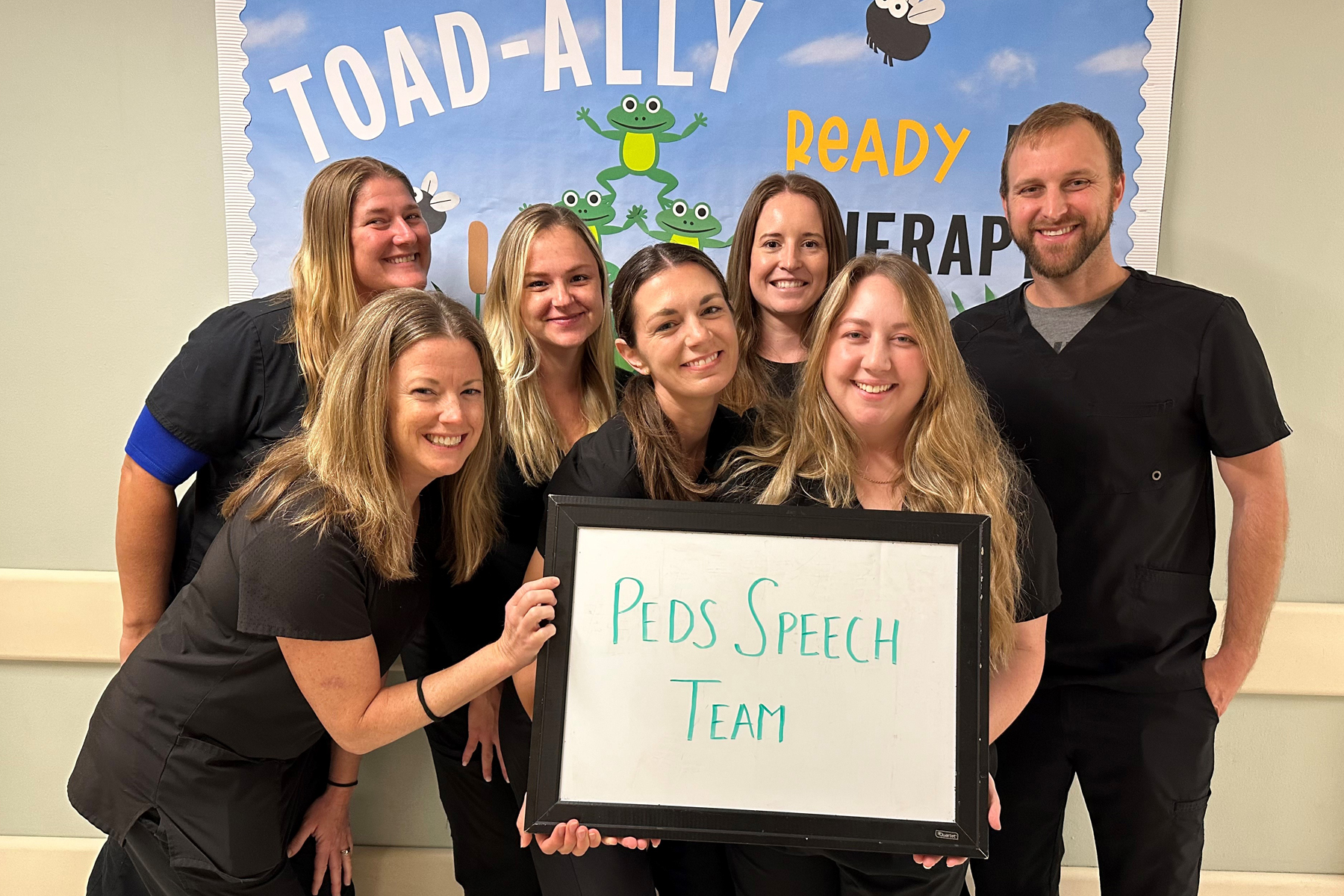
Licensed in speech therapy since 1992, Liz brought a dedicated team of therapists from another facility to create MMH’s Outpatient Pediatric Therapy department, where she serves as director. The program officially opened in January 2019, and since then, they’ve doubled their staff and more than doubled their caseload.
“Manatee Memorial met us with open arms,” Liz says. “They saw a program that supported the community, providers, and most of all, families with children who have special needs. They saw a meaningful program and determined they wanted to add this program to their Outpatient services. MMH had never had an outpatient therapy program, which allowed our team to build it from the ground up.”
The department offers physical, occupational, and speech/language therapies to children from newborn to age 18. For those unfamiliar with these terms, here’s a quick breakdown:
- Physical therapy involves therapeutic play and exercise techniques to improve a child’s ability to perform functional gross motor movements, such as rolling, crawling, and walking.
- Occupational therapy draws on play activities, repetition, and sensory integration to help children improve daily living skills and fine motor abilities. For example, children may gain greater independence in dressing themselves, help with feeding/swallowing, improve balance or attention to tasks, or help with sensory issues.
- Speech therapy works interactively with children to improve speech, language, and feeding skills, including the ability to pronounce sounds, communicate needs and desires, follow directions, and develop socially appropriate play with objects and people.
 While Liz’s team sees many patients with conditions such as autism, Down syndrome, cerebral palsy, and spina bifida, other patients need help to mitigate challenges stemming from birth injuries, developmental delays, or sensory integration disorders. And the sooner a child is seen, the better.
“Development is like building blocks,” Liz says. “If you don’t have a strong foundation, then by the time you’re working on the top of the building, things will not be stable. A child’s first year is especially formative. Early milestones like lifting their head, rolling over, crawling, and early feeding—if we’re seeing issues in these areas, we know they’ll need extra help. We can still work with them at later ages,” she adds. “We may just have to adjust our goals to help them catch up.”
Play on purpose
Goals is a keyword. Yes, pediatric therapy is play, but therapists approach every patient—and every activity—with an end goal in mind.
“In a speech therapy activity, we might play Candy Land and practice naming colors,” Liz explains. “But maybe we’ll add cards with pictures, which we’ll get them to describe. To give an example from occupational therapy, we ask the child to dress a baby doll. Where do the pants go? Where does the shirt go? They practice fine motor skills but also think through the process of getting dressed.”
The program takes a transdisciplinary team approach, where children enjoy one-on-one time with their respective therapists, but the team also works together. “The speech therapist knows what the physical therapist’s goals are related to a specific child,” Liz says. “And the occupational therapist knows what the speech therapist’s goals are. Everyone carries over those goals into their own sessions.”
As the only hospital-based pediatric therapy program in Manatee County, the department has helped hundreds of families find practical solutions to challenges, building bridges to brighter futures.
“One thing I love about this work is the message we convey to the community,” Liz says. “Society used to hide away kids with special needs, but we’re saying, ‘No, they need to be with all our other friends, doing amazing things, too.’ I also love to witness their progress. Families may have heard that their child would never walk, yet now they have participated in therapy and are walking.”
Functioning as part of the hospital, MMH’s pediatric therapy services are funded through private insurance or Medicaid, with a primary care provider’s referral. But the impact of these services on the community resonates with certain advocates, who work hard to ensure these services remain available to families who need them.
One notable figure whose efforts supported the clinic is Vernon DeSear, chief executive of the Manatee Memorial Foundation, Inc. Its mission—to support the healthcare needs within Manatee County—aligns perfectly with the goals of this specialized pediatric clinic.
Progress and potential
When Vernon heard Liz Brown’s therapy team needed a new home, he rolled up his sleeves and tackled the logistics of space, budget, and other practicalities. Years later, he’s still working to expand the program’s reach.
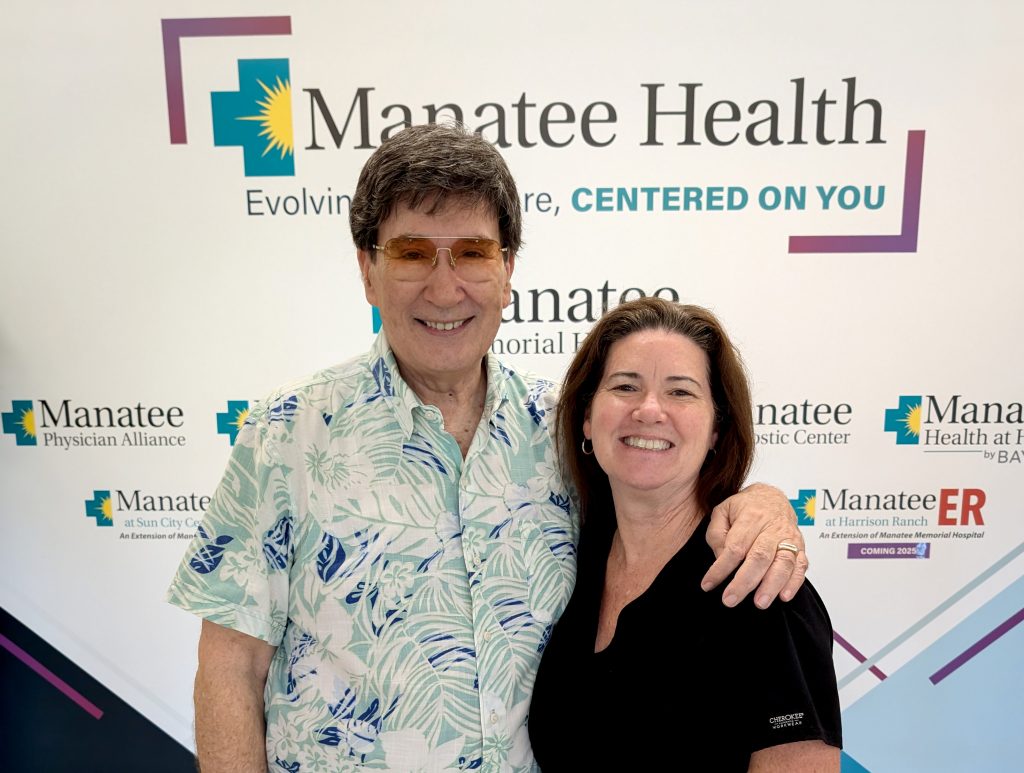 “This kind of treatment is expensive,” Vernon explains, “and many families struggle to afford it. But I’m committed to finding the necessary funds to make these services accessible to anyone who needs them—because I see the difference it makes. I see the child come in who at first could not speak or interact with anyone but who’s now skipping, smiling, and happy. I’ve talked with parents who are beyond grateful for how these services have changed everything for their children. I mean, tears roll down your face, listening to these parents. For the longest time, they felt like it was all over. But now they can finally see that there’s life ahead of them.”
Apart from educating families about the available services, Vernon hopes to further support the clinic by encouraging big-hearted donors to pool their resources into a collective funding source, one to which other donors can contribute through donor-advised funds. And his advocacy in this space has not gone unnoticed.
“Vernon is a champion of children,” Liz says. “He has such a heart for them, and our patients especially. He remembers individual cases and celebrates their progress. And he cares so much about this county and this hospital, and I think he always will. It’s his home away from home.”
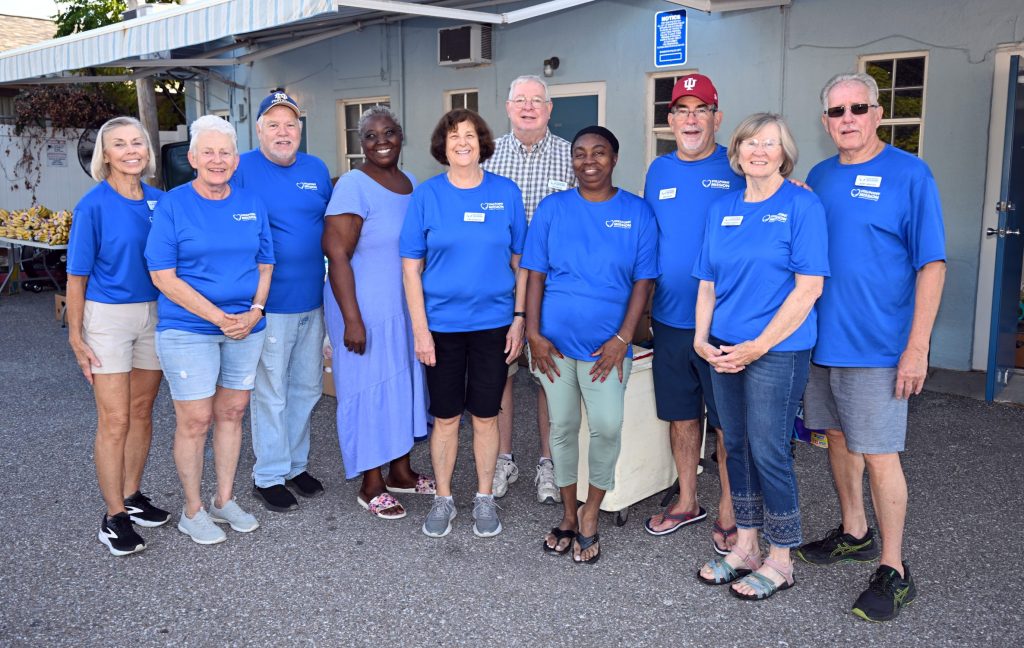
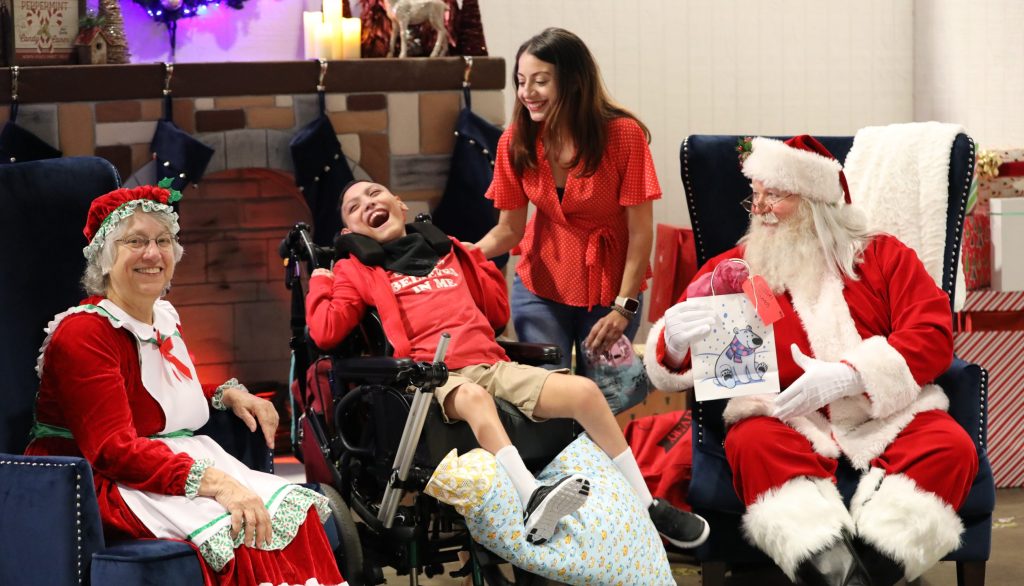
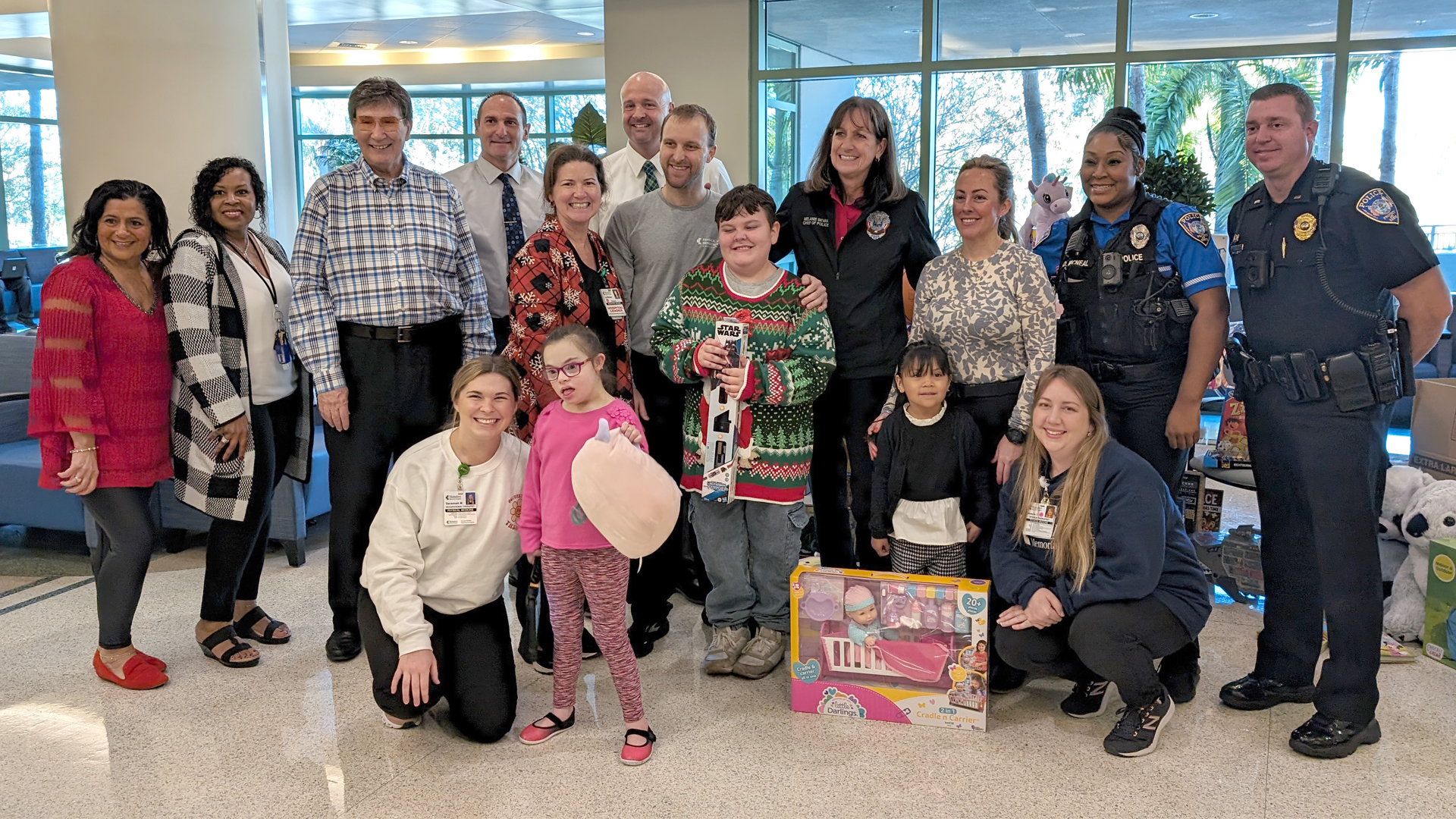
Helping the community thrive forms the heartbeat of the Manatee Memorial Foundation as a whole. For example, the foundation’s volunteers often look for ways to serve various hospital departments. As children take their job of playing seriously, the clinic’s toys, games, and equipment often need to be replaced. One recent Christmas, volunteers asked the Outpatient Pediatric Therapy clinic for a wish list. Members stepped up and fulfilled that list, bringing items as gifts to their Christmas party, where Liz shared more about the program.
“Having compassionate caregivers on your side, like Vernon and those volunteers, makes a big difference,” she says.
Providing comprehensive care to children who need these services is clearly a team effort. However, one more group’s involvement also contributes to the success of these therapies: the parents.
Part of the family
In a perfect world, children wouldn’t need therapies to augment their development; they would master every milestone with ease. Given the choice, it’s safe to say parents would not find themselves walking through this clinic’s doors. Well aware of the challenges, the team seeks to reassure parents with an empathetic, compassionate approach.
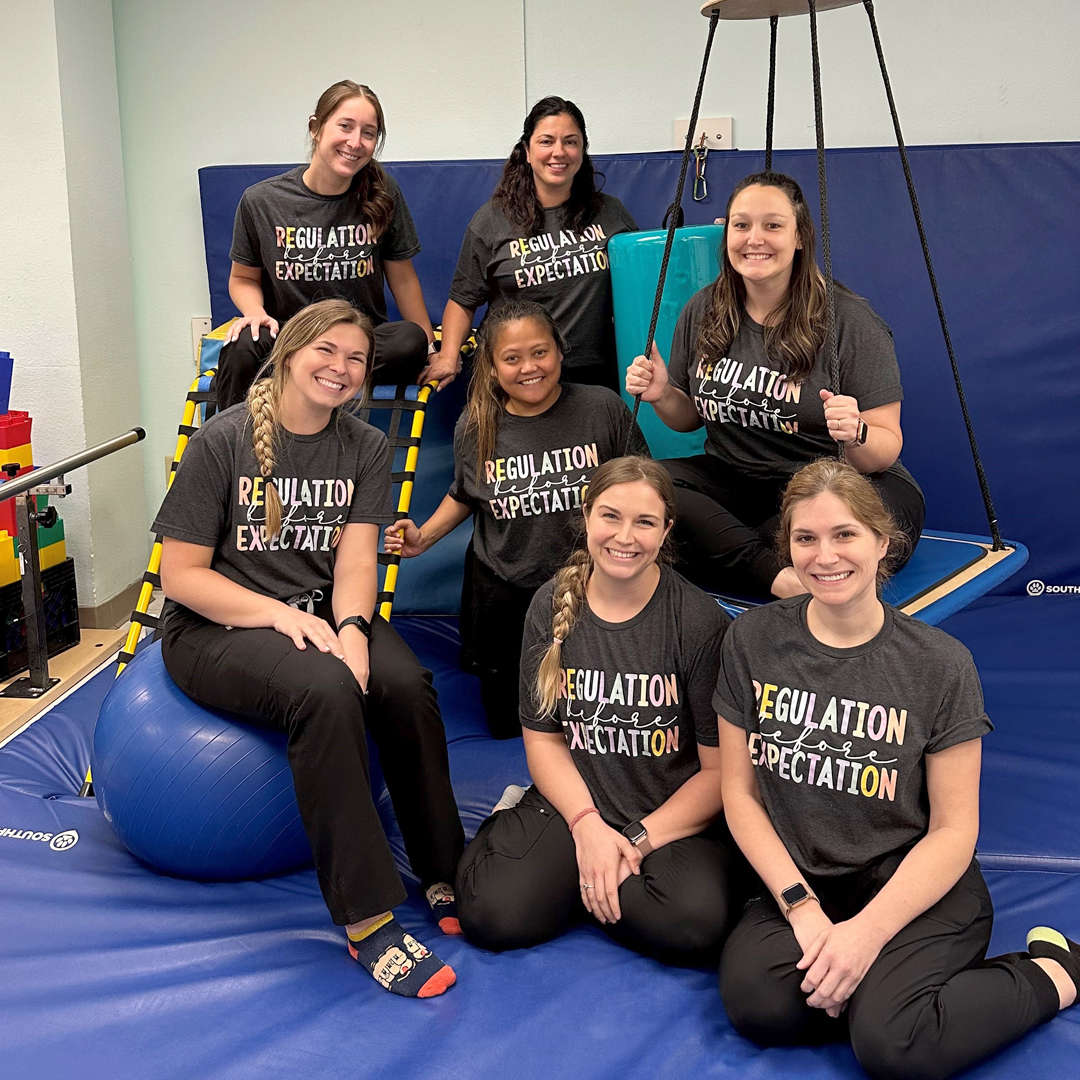 “Our best philosophy is to meet them where they are—not just the child, but the parents,” Liz says. “Where are they, in this moment? How frustrated are they? How scared are they? How distant or how engaged? They know very well what their child can’t do, but we want to meet parents in the positive, to say, ‘But your child can do this, and they can do that.’ We aim to come alongside every family, and in a sense, we become part of that family. We’re saying to them, ‘We’ll hold your hand and walk through this together. We’ll support you so you can be the advocate for your child that you need to be.'”
This optimism lies at the heart of pediatric therapy. The team here knows successful outcomes are possible—because they’ve witnessed so many. Whether children who once could not talk later become speech therapists themselves or if kids grow in greater independence and can be part of their community, early therapies like these give children the foundation to be able to move forward and succeed.
As for parents? Many find themselves navigating a situation they never planned for, a challenge for which they feel under-equipped, or a diagnosis they never saw coming. But these therapies—and the expertise of an empathetic, interdisciplinary team—offer parents a much-needed lifeline.
In a word: hope. And in the Outpatient Pediatric Therapy clinic, hope, might just look like playing Candy Land.
More info
For more information about Manatee Memorial Hospital’s Outpatient Pediatric Therapy clinic, visit www.manateememorial.com/services/pediatric-services or call 941-745-7533.
If you would like to donate funds to help a family access these services, please contact Vernon DeSear.
email: CEO@manateememorialfoundation.com MMF Phone: 941-745-6981
Mail checks to Manatee Memorial Foundation, 206 2nd Street East, Bradenton, FL 34208