WORDS & PICTURES: Gabrielle Versmessen
When walking up to Prospect Riding Center, one is greeted by the sounds of chickens clucking, roosters crowing, cows mooing, and horses snorting. Not your typical equine therapeutic riding center, Prospect Riding Center offers a variety of hurdles to help folks with special needs overcome many different drawbacks, whether they be mental or physical.
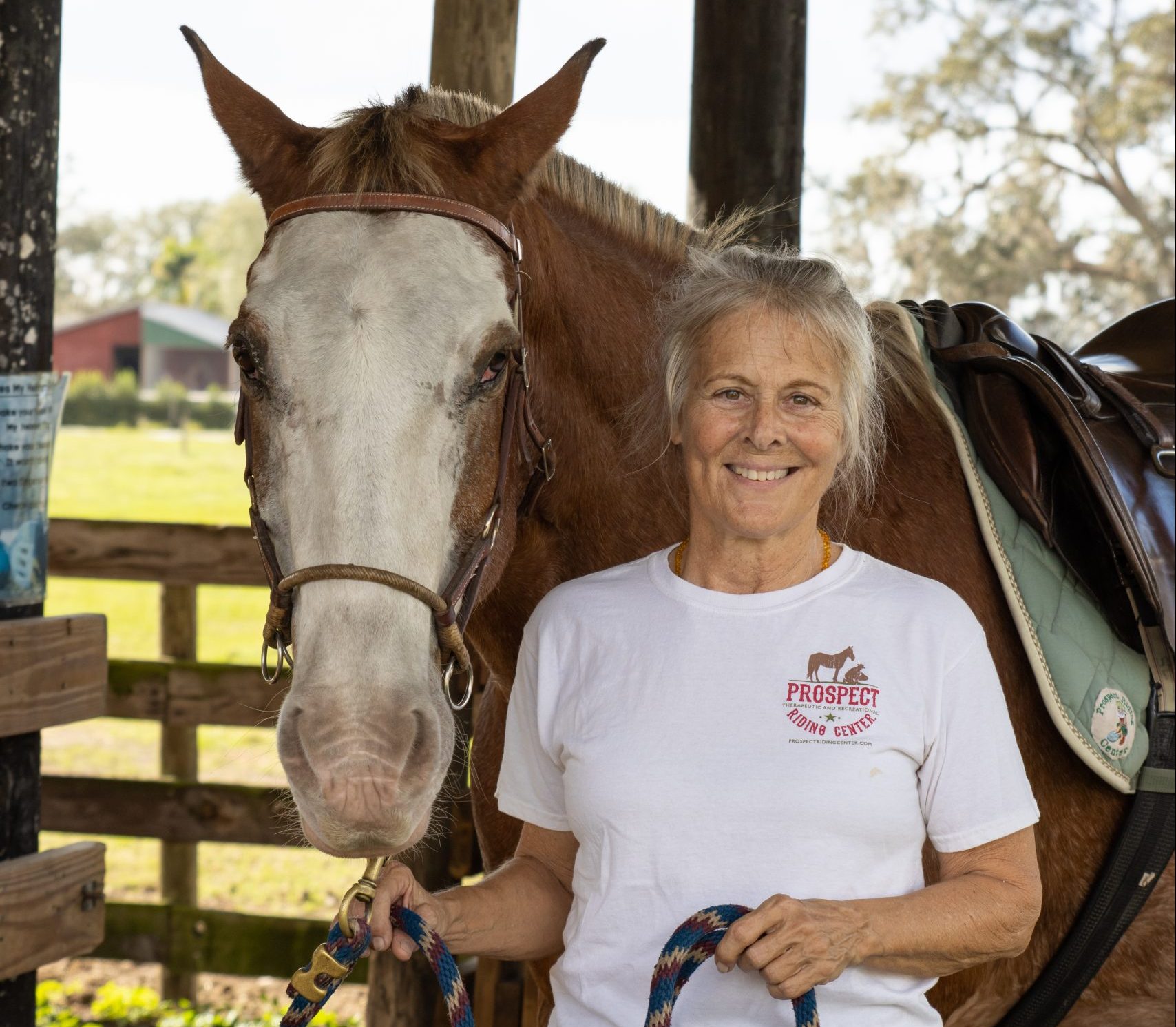
“Coming here, you don’t know what you’ll come up on,” Susan Tambone, Founder and Executive Director of Prospect Riding Center, explains. “The smells, the sounds, the different horses, and how they react is never the same.”
Their mission is to help individuals with special needs overcome physical, developmental, and psychological challenges through equine-assisted therapy. Learning to care for the horses is a big part of the therapy! The first few visits might be just barn lessons. The rider will go in and meet the horse, brush them, and get familiarized with the different tools. If the rider isn’t in the position to get right on the horse, they’ll start off in the barn. They do have some side walkers who have some confidence, fear, or mobility issues.
Susan started the center in May 2013. Her daughter had early childhood-onset epilepsy. Not wanting to put her on medications, Susan sought out alternative methods. She found therapeutic riding and fell in love with it. She volunteered at the center, became an instructor, and then had ideas for her own place. She started with one horse and one rider. This May, they’ll be celebrating their ten-year anniversary! Only 30% of therapeutic riding centers make it that long.
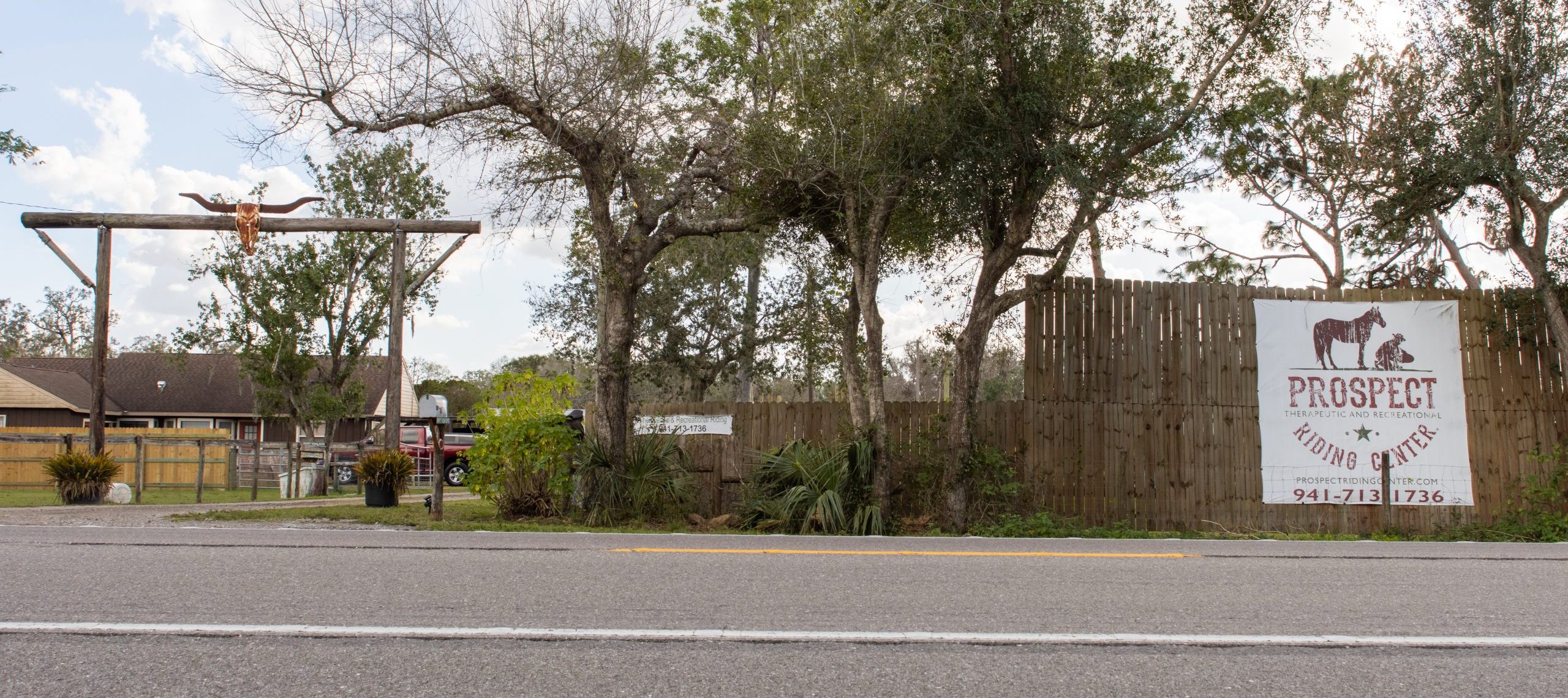 But it’s not “Susan’s way or the highway,” as she says. Prospect Riding Center is certified by the Professional Association of Therapeutic Horsemanship (PATH) International. PATH International has rigorous standards, credentialing, and education for its centers to provide the safest and best practices in the equine-assisted therapy industry.
When they first opened, being a PATH member center and the safety precautions that they have in place gave the families a lot of confidence and peace of mind to have their loved one attending therapy at Prospect. Additionally, the horses are treated in a special way. The horses could have a rider making odd noises, being off balance, or ready to bail from the lesson and jump out of the saddle at any time. These situations can be stressful for a horse, so everything the volunteers and staff at Prospect do to the horses is as stress-free as possible.
Susan says: “If the volunteer or I approach the horse, the horse doesn’t know the difference. We do things the same way. We hang things the same, go in and out of their doors the same, and put their equipment on the same.”
In a herd, horses will regulate their heartbeats. This means that if one horse starts to get worked up, the others can pick up on it. This is why keeping the horses as calm as possible, even in high-stress situations, is essential.
Never wanting to turn anyone away from their services, Prospect has a large horse, Tank, capable of carrying heavier weight. Each horse has a weight ratio to determine how much it can safely carry on its back. So, ensuring that there was a horse in the group who could support a larger individual was an important factor. In the summertime, they have Dream Oaks Camp Foundation for Dreams on site. Tank will also carry the large adaptive saddle, so they are able to strap kids in.
“Talk about getting everybody to ride!” Susan exclaimed.
 A unique experience that Prospect Riding Center offers is that the service provider, parent, or guardian of the client can come into the lesson with them. At other riding centers, that person typically stands on the opposite side of the fence. Susan quickly learned that bringing someone the client is familiar with into the lesson the first few times can greatly help create a smooth transition for someone with anxiety or other issues.
Additionally, families have the option to ride with the therapeutic riders. For many, it’s their first time riding with a family member.
Another benefit of Prospect’s facility is its location in Myakka, Florida. Being off the beaten path gives the riders a chance to be out in the open and more in control of their horse as they have fewer distractions from the road. The rider could be hooked up to a leader or not, but there are obstacles on the trails that they utilize to catch the riders’ eyes and keep them riding forward.
These obstacles include a giant Minion made of tires, color-coordinated items, a rainbow trail, a rock trail, a beanball toss, basketball, and a ring carry. Part of the therapeutic process is that the client might have to reach across the horse, grab a ring, and take it to a ring tree. Weaving through the noodles, climbing on tires, and walking through a ditch help them with steering.
“Even though everything is colorful and looks playground-ish, it all has a meaning and purpose,” Susan says.
Therapeutic riding helps the brain with proprioception, knowing where you are in space, and the equal development of the left and right brain. Cross-brain activity is a significant factor in the therapy sessions. Prospect offers English and Western saddles for riders. The Western saddles have a horn that riders can hold onto, but the English saddle gives them more contact, more of a core workout, and is ultimately the most therapeutic. It’s a low-impact workout because the rider sits, but every joint moves.
Prospect Riding Center currently has eight horses on the property, with six in the program and two mules. They obtain most of their horses through donations, and one horse is currently on loan from Wolfe’s Born to Ride trail riding company. The horses go through a PATH-approved evaluation. This includes throwing balls around the horses, stringing noodles on them, and ensuring they’re desensitized.
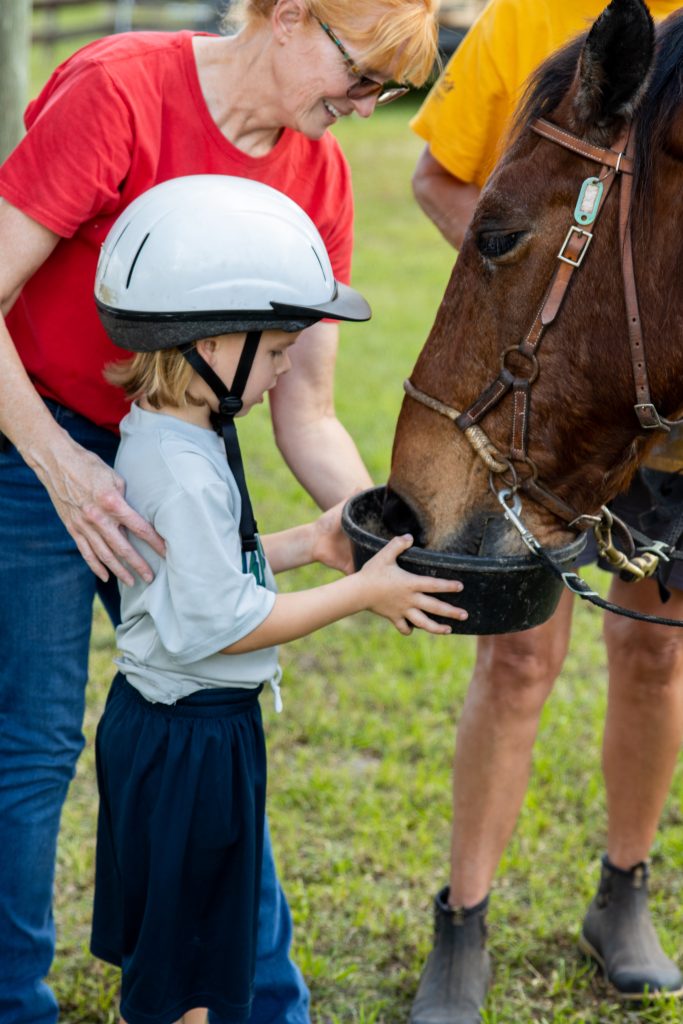 Therapy riding looks different for everyone that comes to the property. You wouldn’t know which one was a therapeutic rider and which was a recreational rider. This comforts some adult therapeutic riders because they don’t feel like they stand out.
Susan emphasizes: “This is a safe place for whomever you are.”
Prospect is mainly funded through grants, donations, and income generated from recreational riding. They offer private pay therapeutic riding and accept Staywell Medicaid insurance but have a scholarship fund for select riders.
One of their youngest, newer riders, Ari, has apraxia of speech. His mother, Courtney, says that she notices a difference in just his third week of lessons. “Ari is very natural with riding. He loves animals, so this experience is great for him with the other animals on the property in addition to the horses.”
Susan notes that one of the most moving moments for her is watching the change in the teen riders battling depression when they come around the horses. “It’s been some tough times for our teens in school the last few years. During the day, they might be bullied at school, stressed, or not sleeping, and their parents are frazzled. But I’m able to see that with this little blurb of their day, they can smile and relax their shoulders.”
- If you want to learn more about the services Prospect Riding Center offers, please visit: www.prospectridingcenter.com.