WORDS: Gabrielle Versmessen
Helping to inspire people of all backgrounds and incomes to make a difference in our Manatee and Sarasota communities, the Louis and Gloria Flanzer Philanthropic Trust created a donation matching program in 2020 that has taken off a lot faster than they expected. In the first year, $4 million was donated to charities. In 2021, the second year, $8 million was distributed. And this year, they have already surpassed $8 million.
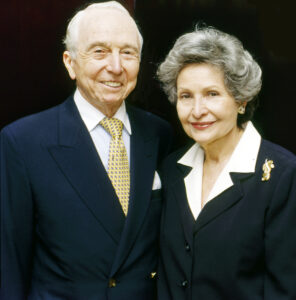 Although Louis and Gloria have passed away, the Flanzer Trust’s trustees, Eric Kaplan (EK) and Dr. Dean Hautamaki (DH), are seeing to it that the couple’s estate gets allocated to the charities that were closest to Gloria’s heart. These charities mainly include those in the education, social service, or medical field. The Flanzer Trust’s matching program does not match funds for organizations primarily focusing on the arts.
“Gloria felt that entertainment was the dessert of life. She wanted to ensure people have a full plate of a primary meal before they partake in that dessert,” Eric explained. She also felt that the seasonal residents of these counties contribute well enough to the arts, so she made her mission centered around reaching kids at the beginning of their life to break cycles of poverty and enhance educational opportunities.
NG: What are your roles as Trustees?
EK: We handle the day-to-day operation. We also serve on other Boards, which helps us learn the best practices we can then spread around. We get the opportunity to learn what each one is doing right so we can keep the good stuff and implement it. We also oversee the operation of the Trust and where the money goes. We consult an advisory board that consists of different specialties like law, medicine, trust regulations, and real estate, but we (Dean and Eric) have the primary decision-making authority.
NG: What brought Louis and Gloria to Sarasota?
EK: Lou was on a business trip to Sarasota, and Gloria came with him. They toured the area, took a trip over the Ringling Bridge, and found Longboat Key. He and Gloria bought a piece of land which now sits the Players Club. Lou once told me that the day his foot hit the ground when the plane landed at SRQ Airport, he felt like a completely different person. Cares seemed to go away, the hecticness of the fast-paced lifestyle of New York City was gone, the density of the people was far less, everybody was so much more polite, and there were nice restaurants and great entertainment. They were residents for 35-40 years.
NG: Were the Flanzers always philanthropic?
EK: Originally from Manhattan, Gloria was a member of a more prominent family, the Milstein’s, whose ventures included real estate development and banking. Her family was always philanthropic and gave back. In fact, you can see the Milstein and Flanzer names in many places in New York. Gloria always felt that she should give back and do significant things in life and death on a perpetual basis. She felt that she was extremely fortunate and had more money than she’d ever be able to spend. So, she left her entire estate to the Flanzer Trust.
NG: How did the Flanzer Trust get started?
EK: The Trust was created in the 90s but was not nearly as active until post-death. Gloria tended to do one or two big projects a year. Even with all the wonderful aspects of Sarasota, there is still a large part of Sarasota where there is a crushing need. Gloria felt that the quality of life in Sarasota was greatly enhanced by the important work that the agencies who work in social services, education, and healthcare do. And the people who are unfamiliar with these agencies reap much of that benefit.
 NG: Can you tell me more about the Matching Program?
EK: The matching program was inspired by Gloria’s concern about getting the typical Sarasotan involved. She wanted them to understand that their lives were being improved by these agencies and to support them. It took off a lot faster than we expected! The first year, we matched $4 million, then $8 million the following year, and we’ve already surpassed $8 million this year.
DH: With Eric’s expertise and Gloria’s philosophy of how regular folks in the community should be helping their community, that’s how the matching program has really been successful. We’re not looking at large whale donors. We’re looking at $5 to $500 contributions that people are getting matched each month. Eric and I are always looking at transformational stuff as well that can have a real impact on people. Things that can touch thousands, if not hundreds of thousands of lives, in and around our community. We’re also a cost-free enterprise.
EK: Unlike other matching programs, through the Flanzer Trust, the donor doesn’t have to pay the extra fees that come with the credit card charges. So, if you contribute $100, the agency gets $200. You don’t have to pay $112 to cover the cost of the credit card charges or anything like that. We absorb it all.
NG: What other work has the Flanzer Trust been a part of?
DH: In general, we try to make equipment purchases. We do brick and mortar, building buildings and such, but our biggest concern is it having to be repurposed 8-10 years later. We have been involved with helping UF’s advanced translational research division, developing vaccines for pediatric brain tumors, advanced diagnostic imagining in dermatology, working with equipment that essentially photographs a body and identifies every mole, and assesses high-risk and low-risk lesions.
EK: Before Lou passed in 2013, he had dementia. Jewish Family and Children’s Services was having a seminar that Gloria was attending on how caregivers can cope. She found the space not large enough for the seminar and called the CEO. He said they didn’t have a lot of room because they only had the one big room for events, and there was a lot of demand for it. She called me and said, “Find him a building, and we’ll buy it for them.” They furnished it, built it out, and paid for everything, with the Benderson’s donating their labor and design skills.
EK (cont.): People are also free to make their own contribution to the Flanzer Trust when they don’t know which agency to choose. People might not be aware of which ones are the best agencies, and they might want to leave that to our judgment. If they want to make just a straight contribution, we’ll be sure to see to it that it gets to the agencies and not to our major initiatives. Additionally, we gave a substantial amount of money, which we’re now doubling due to expansion needs, to the Boys and Girls Club in Sarasota and DeSoto.
DH: The fundamental goal of the Boys and Girls Club is about education and developing healthy children, starting early on. It’s a great campus: with an industrial kitchen, great computer rooms, and many volunteer teachers. It’s been about three or four years since we got involved, and when we started, 90% of the third graders in DeSoto County were reading at the first-grade level. Now, 90% of the third graders are reading at the fifth-grade level.
EK: It’s just one club in one county in one state, but if people do these kinds of things within their own communities, you’ll see improvement, you’ll see the quality of life that makes a difference, and if you benefit from it, you really should contribute to it.
- If you are interested in helping support our community through the Flanzer Trust, please visit flanzertrust.org, where you can select from over 400 approved agencies that will help the greater Suncoast area.