WORDS & PICTURES: Gabrielle Versmessen
Imagine living in a community where language barriers are broken, creating a common ground where we’re able to see ourselves as more the same than different. ¡HOLA! Elementary at Manatee School for the Arts is striving to do just that.
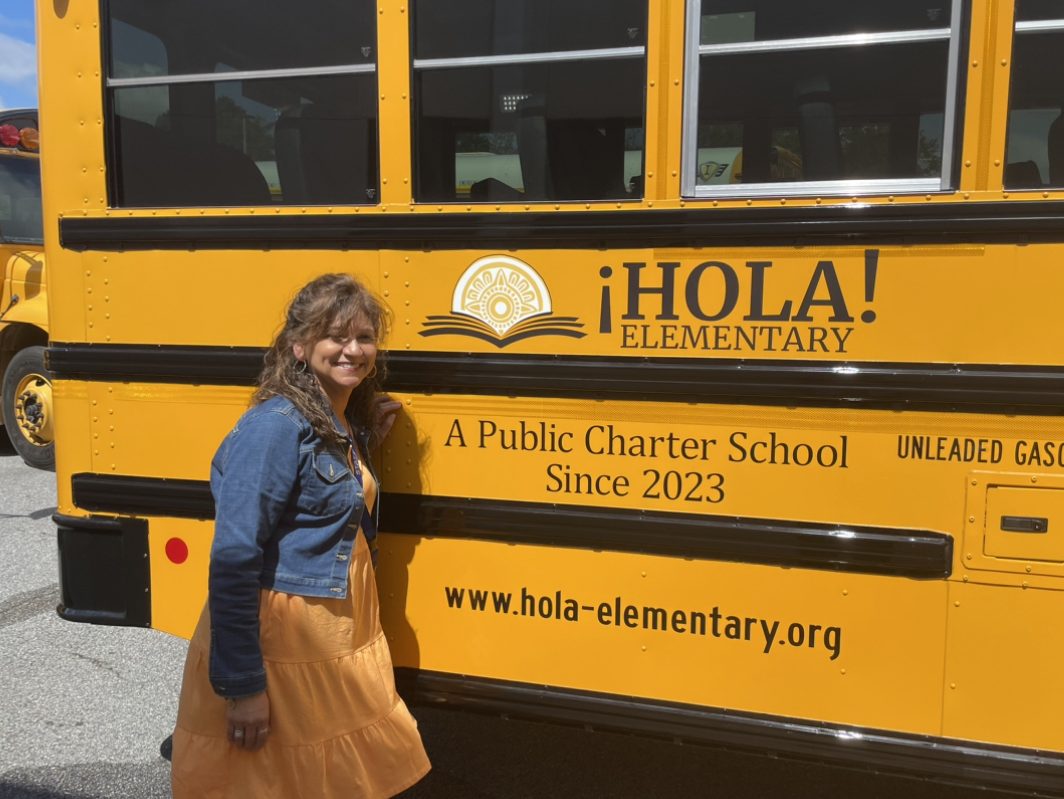
As an arts-infused dual-language public charter school, ¡HOLA! Elementary is the first and only school of its kind in Manatee County. It opened its doors in August to Pre-K through fifth-grade students, with the goal being for students to master biliteracy in English and Spanish while also being able to artistically express themselves, all to achieve academic success.
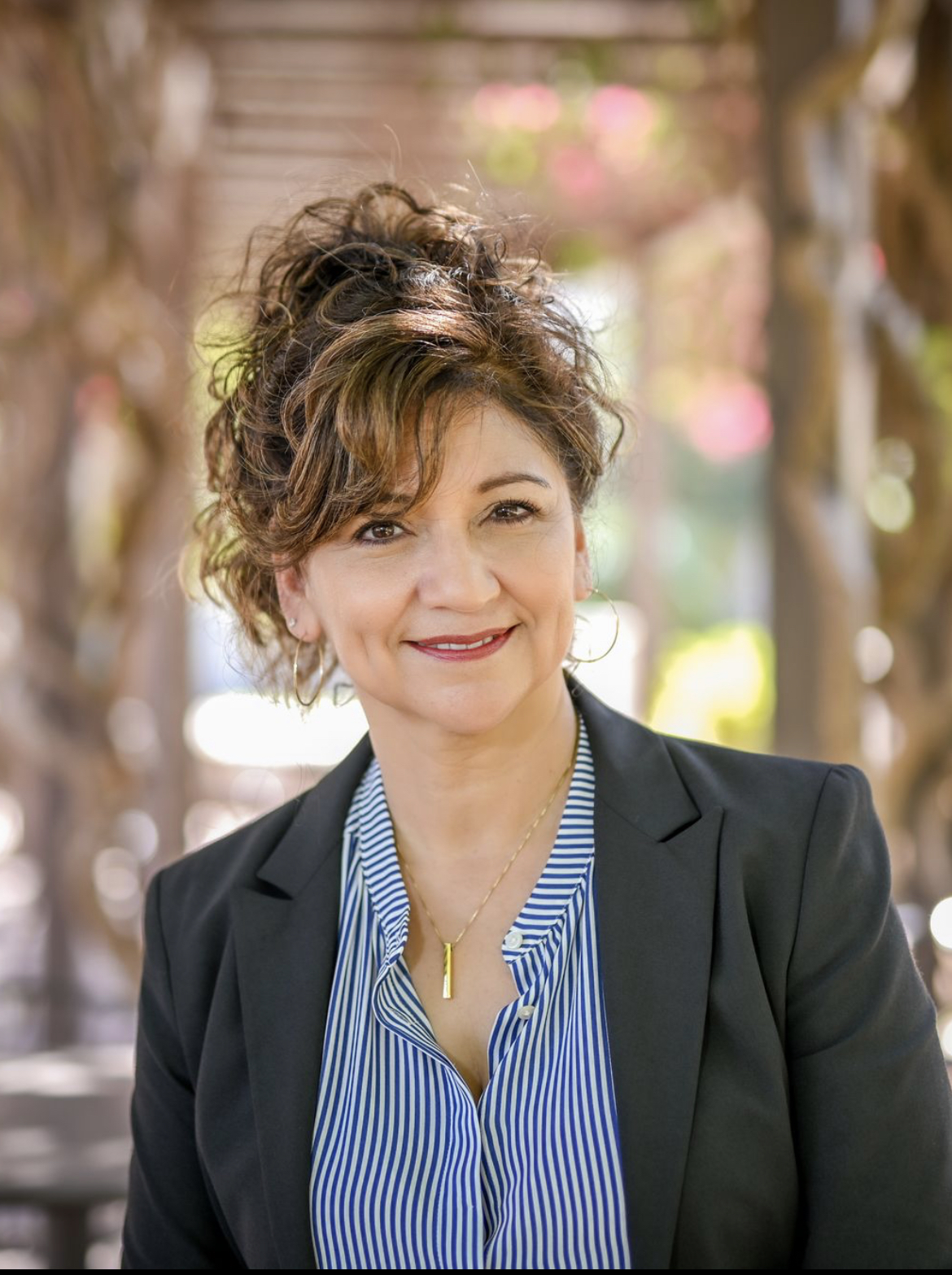 Beginning its first year this month, Dr. Ruby Zickafoose heads ¡HOLA! Elementary as its founding principal. Dr. Z began teaching in 1993 as a paraprofessional, but her time in Manatee County dates back to her childhood. She grew up in Palmetto, hailing from a migrant family, and proceeded to do her internships at Manatee County schools, graduate from USF, and spent 30 years teaching in Manatee County.
However, when she started teaching in 1993, she noticed that were few tools available to help the many English Language Learners within the classrooms. Struggling to close the achievement gap between monolingual English speakers and Spanish speakers was the drive that started the concept for ¡HOLA! Elementary.
“Being Hispanic myself and coming from a migrant background, I knew the challenges of being limited in education. My mom had a kindergarten education, and my dad had a second-grade education,” Dr. Z explained. “English language learners are so appreciative. They want to learn so much and take advantage of the opportunities in America. The families are very humble.”
“I taught at Palmetto Elementary. I represented them in the county as Teacher of the Year. I know the community here. I know what it means to be Hispanic. I know what it means to be a translator, to have a child who is a translator, and to have the vision of wanting my child to be bilingual,” Dr. Z said.
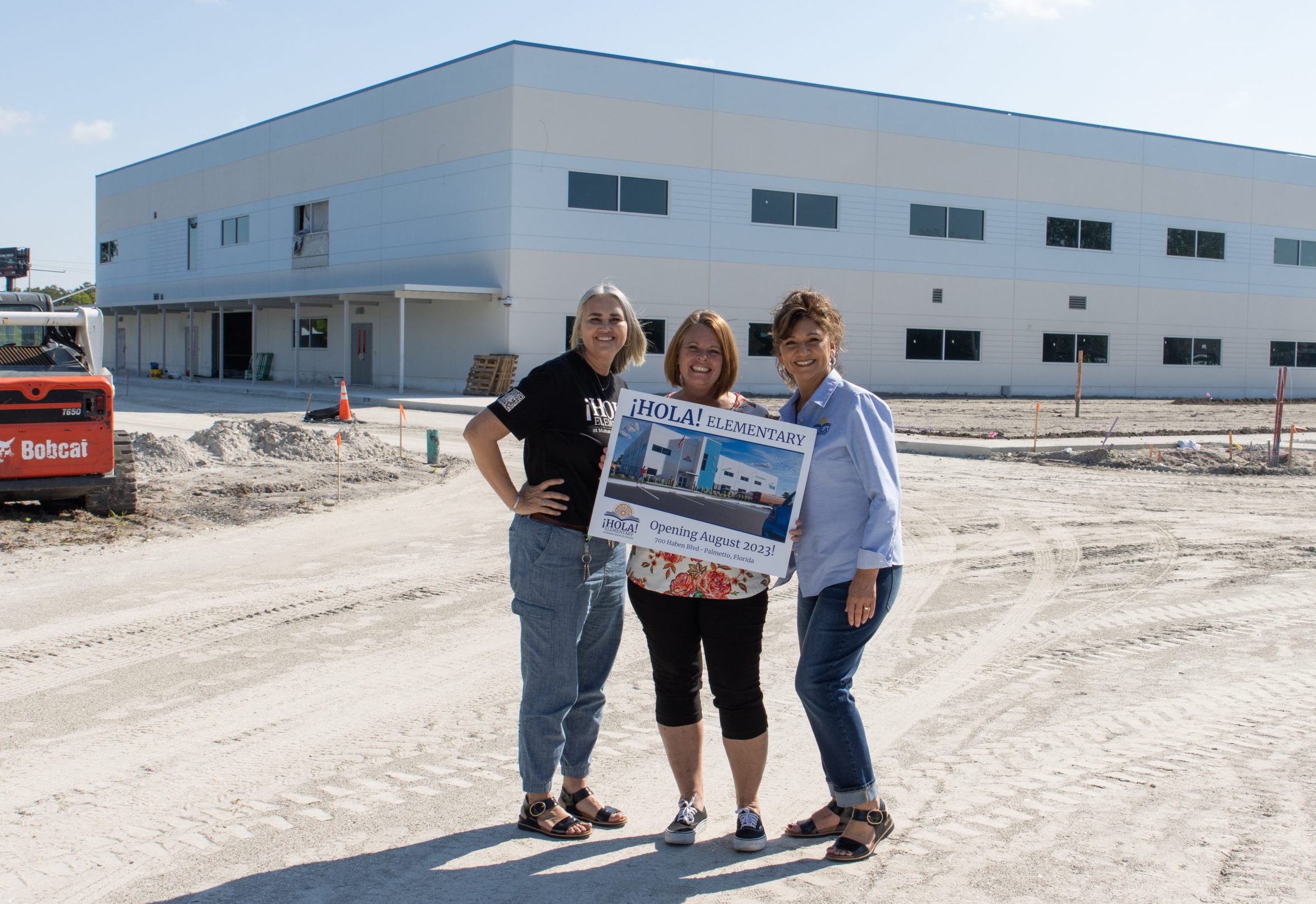
But she’s not doing it alone. By her side, Dr. Z has Rosa Cline and Jessica Spiller on her administrative team. Rosa, an English Language Learner (ELL) Specialist, found her passion for this career through her second-grade teacher and migrant tutor. She grew up in a migrant family, being the youngest of nine children, and struggled with bouncing around schools. However, having the opportunity to go to school gave her a different outlook on things. Both educators helped her realize that there are people out there who really want to help, and she wanted to do the same thing.
“I wanted to make a difference and give that opportunity to the students like I was given when I was younger through different educators. I feel like our community struggles a lot, even from home. The kids don’t get those resources at home, so when they do, they’ll get it from the school,” Rosa said. “I think the philosophy is how do we promote and help our students to have an equal opportunity of all the resources? This area is such a highly populated Hispanic community. I feel like parents want their children to have the resources and equal opportunities that ¡HOLA! Elementary provides.”
Jessica, an Exceptional Student Education (ESE) Specialist, grew up in a small town with little diversity. When she married, she moved to Florida and began teaching 17 years ago. Like Dr. Z, her first job was as a paraprofessional but in an ESE self-contained classroom. Dr. Z was the reading coach at the school during that time, and throughout her 17 years in the school system, Jessica and Dr. Z’s paths kept crossing. Dr. Z greatly influenced Jessica to pursue a higher degree and then go through the dual-language program at UCF.
“She was always in my ear, ‘You need to get your degree!'” Jessica laughed. “I feel like I’ve been on the journey with her. I’m looking forward to someday soon becoming fluent in both languages. This is a dream come true for me and these ladies. I don’t think that I’ve come across a stronger trio. We work very well together.”
 But ¡HOLA! Elementary isn’t just for Spanish speakers or bilingual students! The school accepts children from any and all language backgrounds. They have English language families and English-dominant families enrolling their children simply because they know the value and want them to learn a second language. They even have children from homes that speak Portuguese, Greek, Swedish, Russian, and German too!
“So many people I speak to say they wish they knew Spanish or paid attention in Spanish class in high school. This is an opportunity for them to really embrace it and say, ‘My child will have an advantage being bi-literate.’ Because our goal is to have these students not only be bilingual but also be able to read and write in two languages,” explained Dr. Z.
This philosophy carries over to the staff too. Rosa has had teachers ask if they need to speak Spanish to be employed at ¡HOLA!, but they actually have an array of people at different levels of bilingualism working there. They want the students to see themselves in the entirety of the staff. This means that there are monolingual English people, monolingual Spanish people, and everything else in between.
Dr. Z said: “When we look for people, we ask if they have a bilingual mindset, and do you believe that communicating with someone is so important that we have to use whatever forms we have? Whether that’s drawing pictures, using gestures, or acting to communicate with the other person. That’s at the core.”
Enter the arts-infused content curriculum. The assessments aren’t always paper and pencil. Jessica explained it as the students have the opportunity to create a dance or sculpture, or poster that shows that they comprehend the content that has been taught. This environment allows them to be creative and expressive in different ways to show their knowledge.
“That’s the piece that makes this a very higher-order thinking environment. A child must understand a concept at a higher level to interpret that into a dance, sculpture, or painting. It’s not just a regurgitation of knowledge. They have to interpret, evaluate, and summarize it in a different medium. This makes it into a more gifted type of program,” said Dr. Z.
A typical day at ¡HOLA! Elementary varies from grade to grade. Pre-Kindergarten has a 90:10 model where 90% of their day is in Spanish and 10% in English. Word work and writing are what mostly fill that 10%. This includes phonics and putting letters and sounds together. They start their day with a classroom meeting. The teachers will ask questions like “¿Qué es mi nombre? ¿Como te llamas?” (“What is my name? What is your name?”) to start embedding Spanish into daily conversation. This is also a time for the children to get to know each other and get the agenda for the day.
From there, they’ll go into a 90-minute Spanish Language Arts block. During that time, it’ll be a typical reading block with an interactive read-aloud, guided reading time, independent reading time, independent practice, and a share at the end. There is a language of instruction which will be in Spanish. Then there’s the language of conversation. That is when a teacher will move in and out of English and Spanish.
 Dr. Z clarified: “We never want a child to be confused. We want them to feel like playing with language is just part of the day. If we have 50% of the class English dominant and 50% Spanish dominant or bilingual in that conversation, we’re hoping they’re playing with language and trying things out.”
Then, the students continue through their math block. Their core units are integrated, so science and social studies concepts are taught within the literacy block. The typical PE class and the arts are flex-times where children are allowed to speak language and interplay with Spanish and English. The idea is to create a place where the students feel it’s easy to move into Spanish and English.
When the children move to kindergarten, their day will have an 80:20 model. Then, first grade will be 70:30. Second grade will be 60:40, and third through fifth grade will be 50:50. This allows primary school teachers to be bi-literate and use their native language in a teaching setting. Second through fifth grade is more “language-enriched,” while the primary years focus on developing the dual language and exposing them to as much Spanish or English as possible using their ELL strategies.
Twice a year, in October and March, the students are assessed on their Spanish skills. The incoming students vary from having a command of no language to being quite literate in one or both languages. This assessment is done in addition to the Florida Assessment of Student Thinking (FAST), which is taken three times throughout the school year.
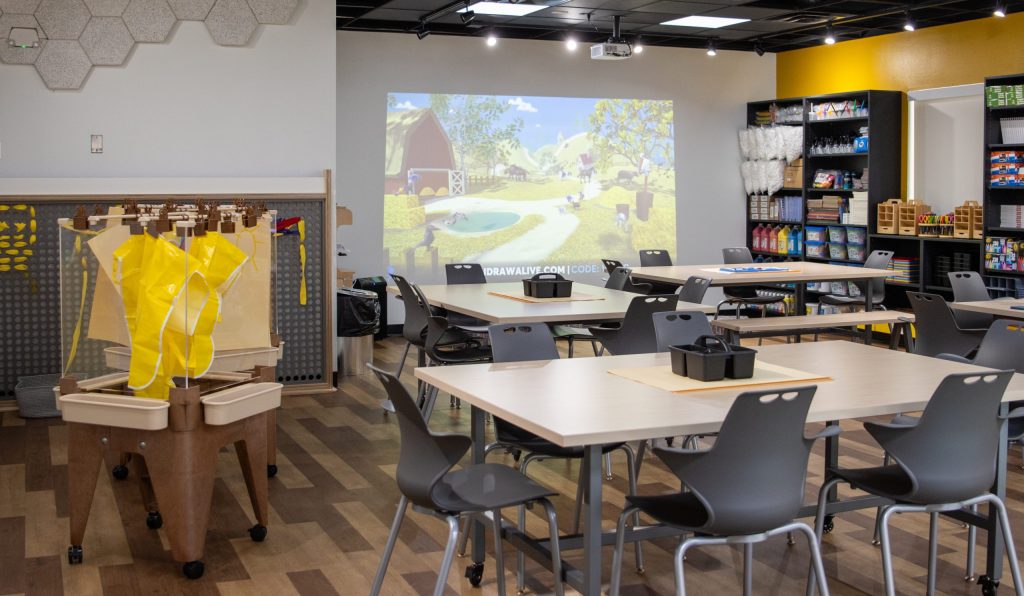
Another thing that sets ¡HOLA! apart is that they hire teaching artists. The arts classes (art, music, theater, digital art, and visual art) are being taught by actual practicing artists. For example, the dance teacher is a dancer who teaches dance and performs. ¡HOLA! has studio-like classrooms equipped with things like Marley dance floors that absorb the bounce when a dancer comes back down and a studio-like theater with a stage and flexible seating.
“The heart of ¡HOLA! Elementary is these two things: The enrichment and acceleration of dual language with the beauty and connectivity of the arts,” said Dr. Z. “The families that want their children enrolled with us have to want and know the value of what it means to be bi-literate. We have families who want their kids to communicate with their grandmother to their child already being bilingual, but they want them to read and write to parents wanting their child in an Ivy League university, so they need to be bi-literate. But the common thread is they value a second language.”