WORDS & PICTURES: Gabrielle Versmessen
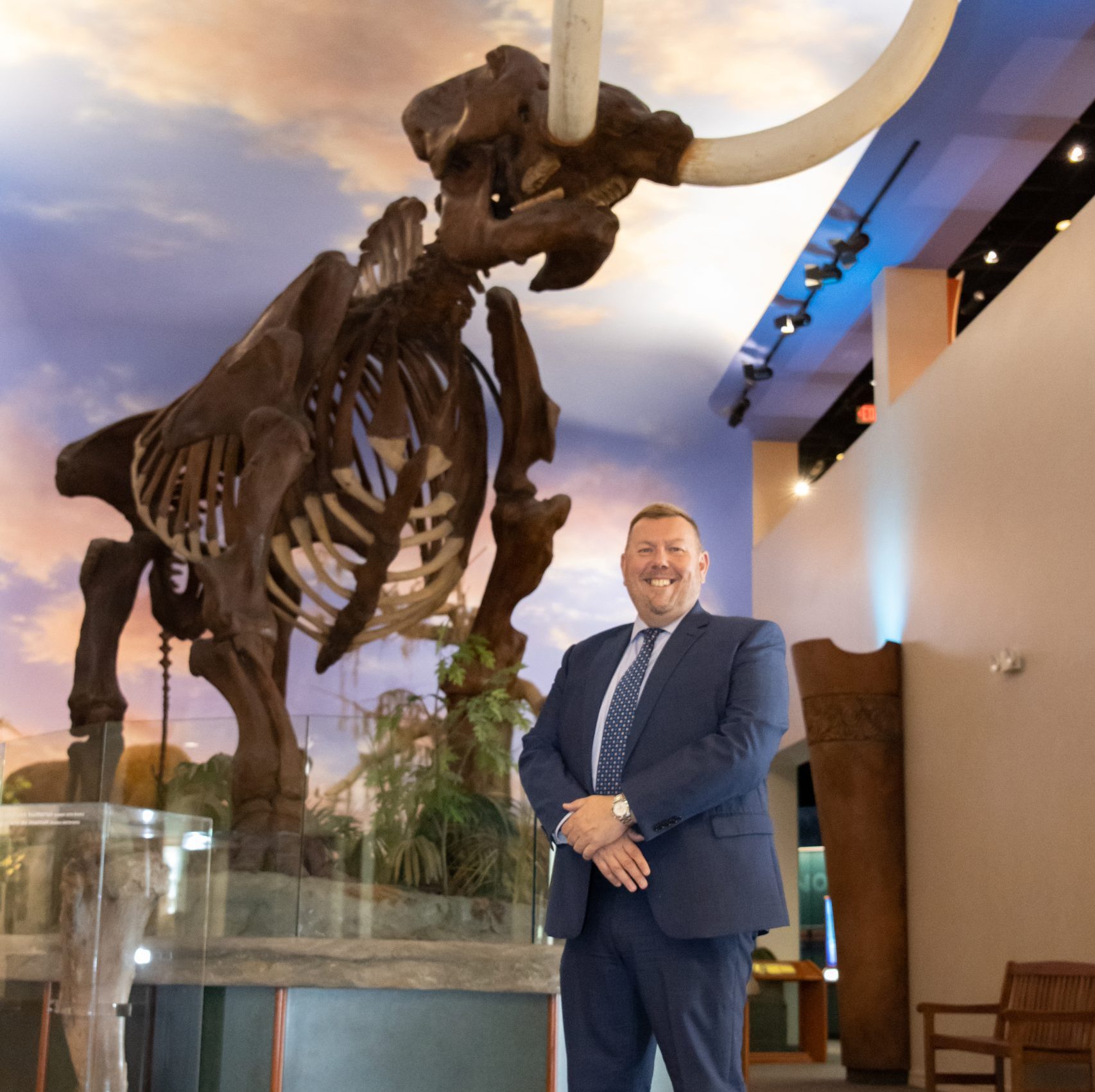
From being a guitarist in a moderately successful punk rock band in England to becoming the Chief Executive Officer of The Bishop Museum of Science and Nature, Andrew Sandall has had quite the assorted road to his current role.
Beginning his museum journey in 1992, Andrew started as a curatorial assistant at his local history museum in Boston, England. At that time, he had no idea what the job entailed or even knew anyone with experience in the museum field. The people recruiting for the curatorial assistant position thought he would be a great fit. By the end of his first week, he knew this was the career he had always been looking for.
“I was doing multiple jobs and decided I needed a ‘real’ job. I was writing some sports reports for the local newspaper because I was involved with the soccer team back home, as well as some music therapy workshops for the local art center. At some point, I had to do something, not just these evening and weekend jobs,” Andrew explains.
He initially interviewed to be a trainee journalist, but the recruitment company had another idea.
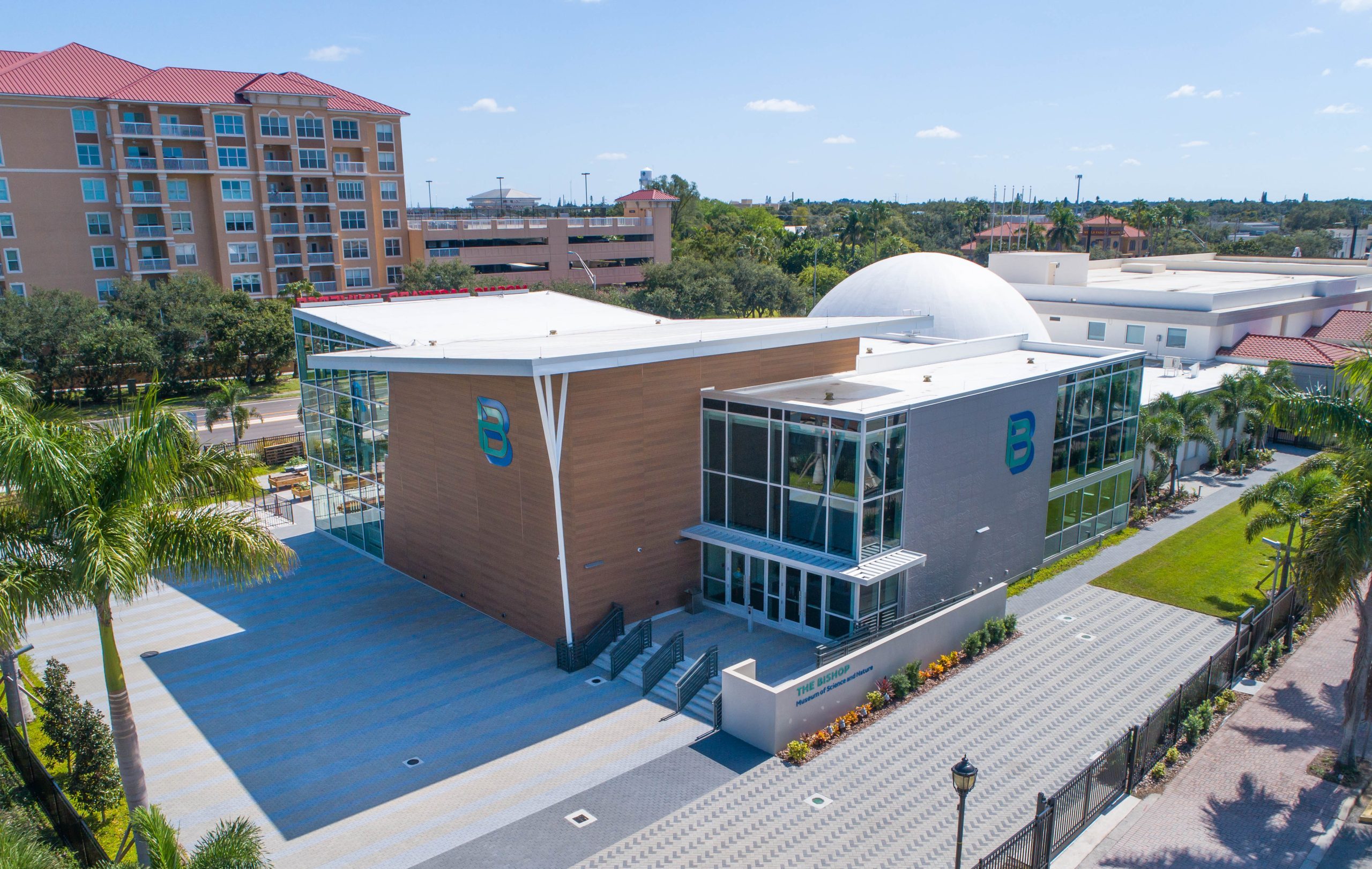 Andrew smiled: “They said, ‘The newspaper wants you, and you could go there, but we have this job at the local museum, and we never get anybody who’s suitable. Would you be interested?'” The rest was history.
After working in the museum for two years, Andrew returned to school to redo his undergraduate qualifications and received his Master’s in Museum Studies. In 2004, Andrew moved to New Jersey until 2008, when he found his way down to Orlando, Florida. After being there for four years, he moved to Daytona Beach, where he would stay for 10 years. After a short stint back in New Jersey, Andrew came down to beautiful Bradenton.
The Sarasota-Bradenton area has been on Andrew’s radar for a while. With the area being so museum-rich, he has spent a lot of day trips and weekends away here.
Andrew said: “I’ve known The Bishop Museum for a long time. Working with the museums in Orlando and Daytona, I found my way onto the Board of the Florida Association of Museums. Brynne Anne Besio, who used to be the CEO of The Bishop, was President during my time on the Board. I knew that when she retired as CEO, I wasn’t in a place where I wanted to move jobs. Then when it became available again, I reached out to her first and asked if she thought I’d be a good fit for this position. She encouraged me to apply.”
What got him so invested in the museum field is how the job differs daily. There are new challenges and new opportunities to meet different people. Andrew has had the chance to meet astronauts, the entire Jim Henson family, and people at the Smithsonian, to name a few.
Andrew’s specialty is eclectic museums. He’s worked at the National Railway Museum in England, multiple local history museums, Orange County Regional History Center in Orlando, and the Museum of Arts and Science in Daytona.
What he enjoys most, however, is taking complicated museums and giving them a singular voice. “The Bishop is very much that. It’s a really diversified museum. You have the manatees, the planetarium, the Mosaic Backyard Universe, and the fossils.”
Seeing patrons connect with what the museum does is another favored aspect of Andrew’s job. Sit in the manatee habitat for a bit, and you’ll hear people asking the care team questions about the manatees and learn more about them.
Being able to step away from his computer screen and hang out with the manatees at their habitat for a little bit helps Andrew realign his focus and see the “bigger picture” as they rehabilitate the manatees.
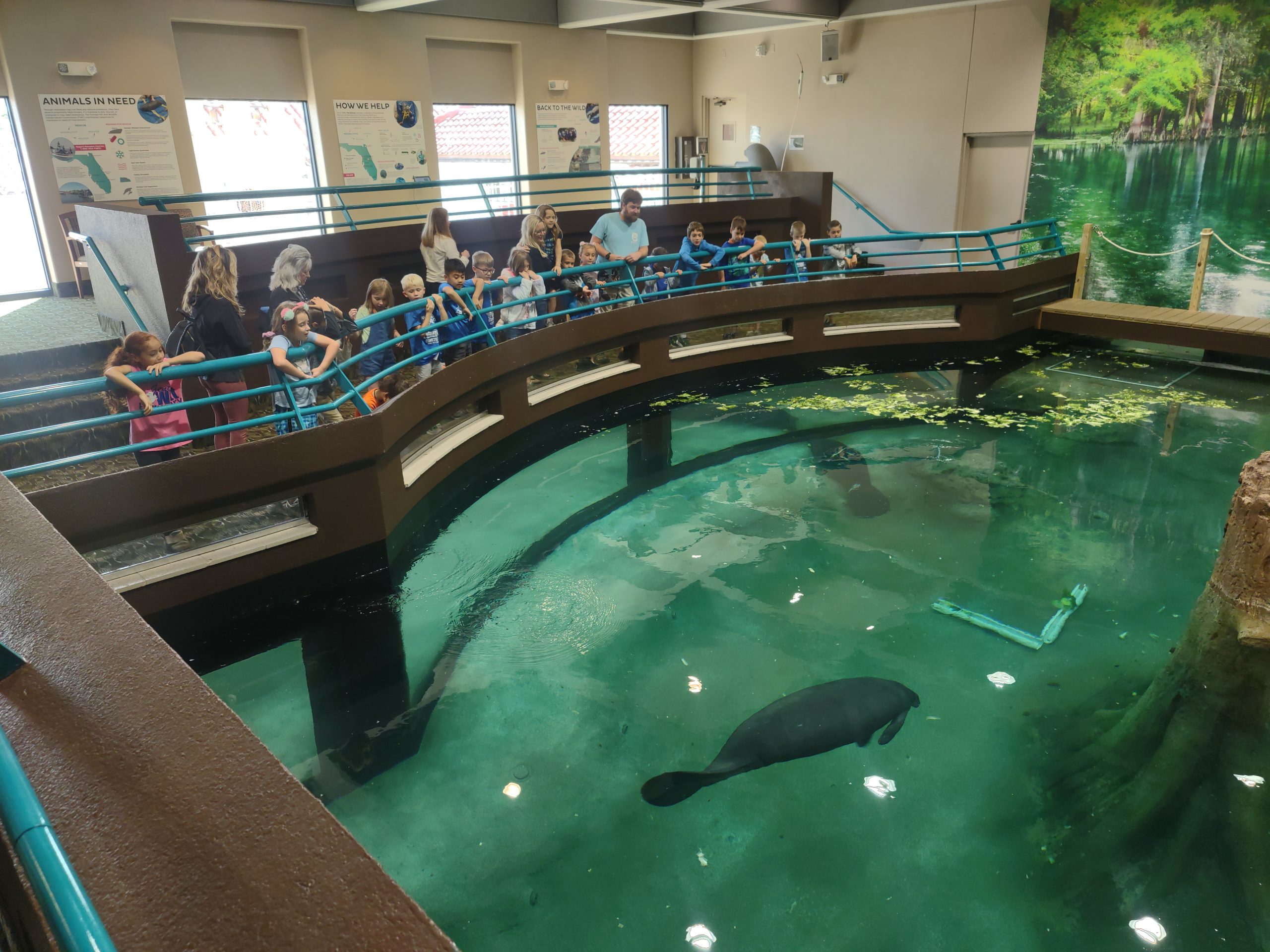 “It’s a workplace where you actually see how we care for manatees, more than just having them as a behind-glass exhibit. You’re seeing someone out there working, cleaning, doing safety assessments, feeding, all those kinds of things. You get to go up to the top and see over and chat with the staff. You don’t get that kind of experience everywhere.”
This education element is very different from most facilities. It’s not just an exhibit but a workspace, and the people are able to learn that the manatees in their care are there for a reason, not always a good reason, but hopefully with a good outcome.
“It’s great being downtown because I’ll walk to my car or go out for lunch and see people walking around with their badges on that they’ve been here and see just how much impact it has. When you get to see people make connections and understand things and understand that museums are for them, that’s always incredibly gratifying.”
With so many great programs, exhibits, and events held at The Bishop Museum, Andrew wants to continue building upon their roster to give the community even more opportunities to come to the museum. Breaking down that barrier is the key thing to do. If people come for a wedding or Soar in 4, they’re already more comfortable with the building and walking through the door. With some familiarity there, it ebbs away at any inhibitions someone might have about coming.
Andrew says: “Building our program base and making sure what we’re doing makes this a museum for the local community is what I’ll be looking to do in my new role.”
In addition to building the programs offered at The Bishop, Andrew wants to start looking at a new strategic plan, which would include an extensive consultation process. This would involve bringing in people who go to the museum, who don’t go, those who go to other museums, people who would like to come, and people from other businesses and organizations around town to figure out how they think The Bishop should fit into the community. He wants to fulfill the role of Bradenton and Manatee County’s museum.
Marti King, a board member of The Bishop Museum, described Andrew as a “natural leader.” When asked what fosters this quality in himself, Andrew replied that it was his inquisitiveness and openness.
He explains: “If there’s anything I’ve demonstrated in leadership, it’s that I’m open to listening and trying to understand and helping people understand themselves. I don’t think anyone would say I make snap decisions or don’t listen to them. I try to have a mentorship style of leadership. We have naturally inquisitive people working in the museum. That’s what led me into museums in the first place.”
 Along with being inquisitive, a passion for understanding things is a quality Andrew would say defines a great museum CEO. He grew up with two things: absolute devotion to understanding everything and being a good storyteller. He says that if you have those two things, at any level working in a museum, you start with an advantage.
“We are all about understanding things and translating things for people to understand. If that passion drives you to know things yourself but are a good communicator, that’s really helpful. Additionally, being able to deal with frustrations well is a good quality to have. There’s always more we could be doing, and collections could always use more money, and so on. You have to be able to navigate through those things and take a step back to understand the difference you’re making in people’s lives with what you have.”
The final aspect of a good museum CEO is empathy for the subject matter you’re discussing. While Andrew has never been a specialist in the subject of any of the museums he’s worked at, besides his hometown history, he has been able to apply good practice by learning as much as he can about the subject.
Fostering the passion for these great qualities dates back to his childhood. His family wasn’t the “seaside family” on vacations but instead would go on day trips to castles or historic areas. His school in his hometown was built in the 15th century, and he was surrounded by medieval buildings growing up.
“I can remember the first museums I went to, and I ended up working in one of them, actually. It was surreal. One of my most vivid childhood memories was being three or four years old and going to the York Castle Museum and National Railway Museum. Walking into the great halls they had, being a small child, I was awed by the scale of everything, like standing next to a giant steam locomotive for the first time or walking into a recreated Victorian street,” Andrew reminisces.
Two people Andrew recalls having worked with that left a lasting impression on his career were a volunteer at a small museum he worked at in England and the chief curator and head of engineering at the National Railway Museum. The volunteer was a retired television and VCR salesman who had the innate ability to tell stories that engaged generations of families, which Andrew was able to adopt as a skill from him.
The chief curator taught Andrew that there is no such thing as a bad question. If this person was walking through the museum and someone stopped him to ask a question, he would answer their question fully every time, even if it made him late.
“His outlook was that a meeting could wait, but your question can’t. These two gentlemen were not classically trained museum studies graduates, but they understood what they were doing and wanted to share what they had in an engaging way. This is what I strive to achieve every day.”